Wholesale Ultrafine powder classifier
Home / Equipment / Classification Equipment / Ultrafine powder classifier
Ultrafine powder classifier
  • Ultrafine powder classifier

Ultrafine powder classifier

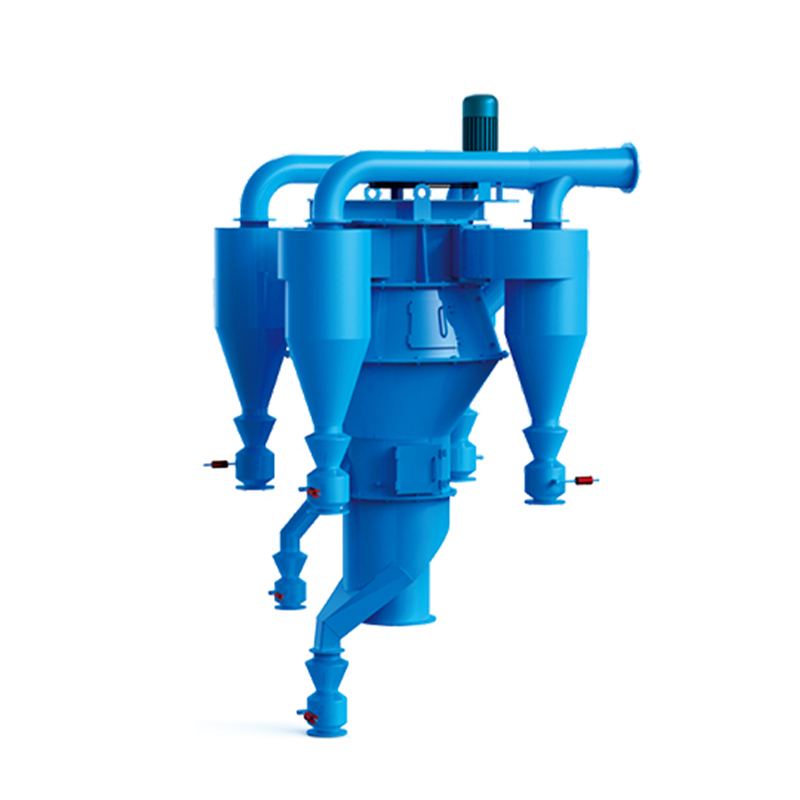
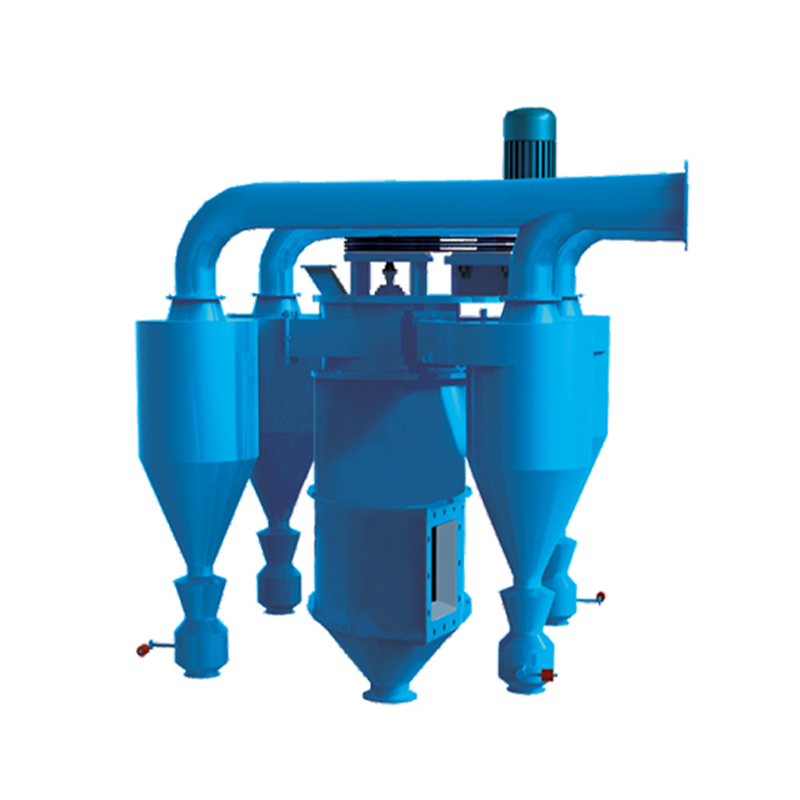
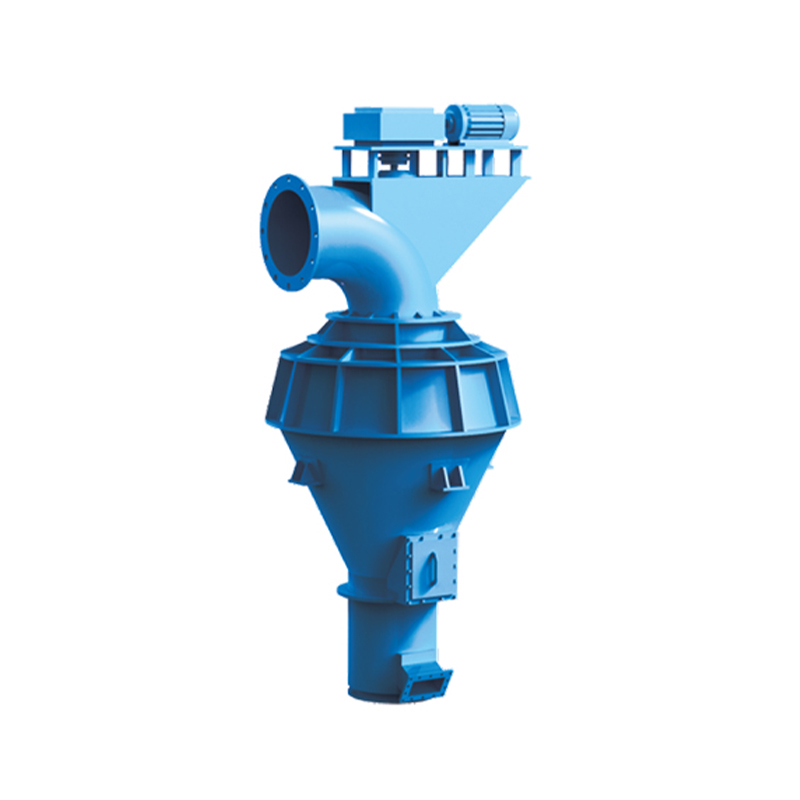
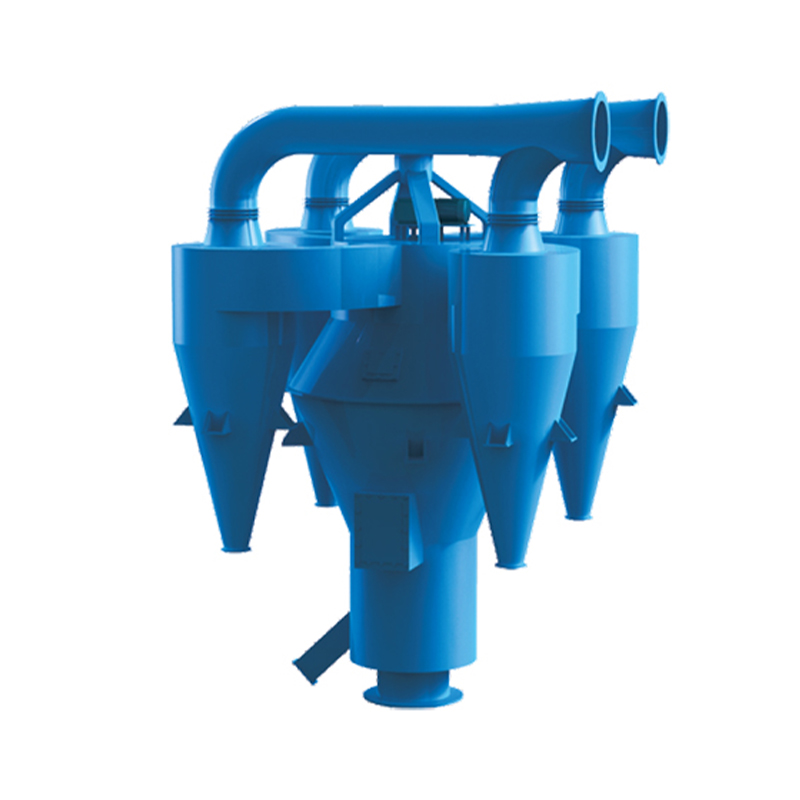
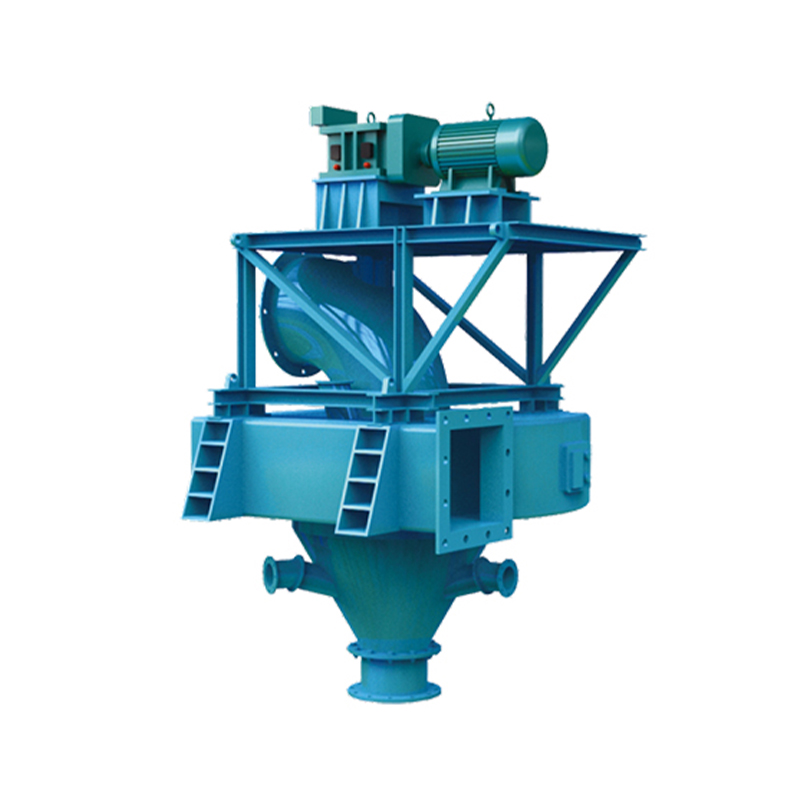
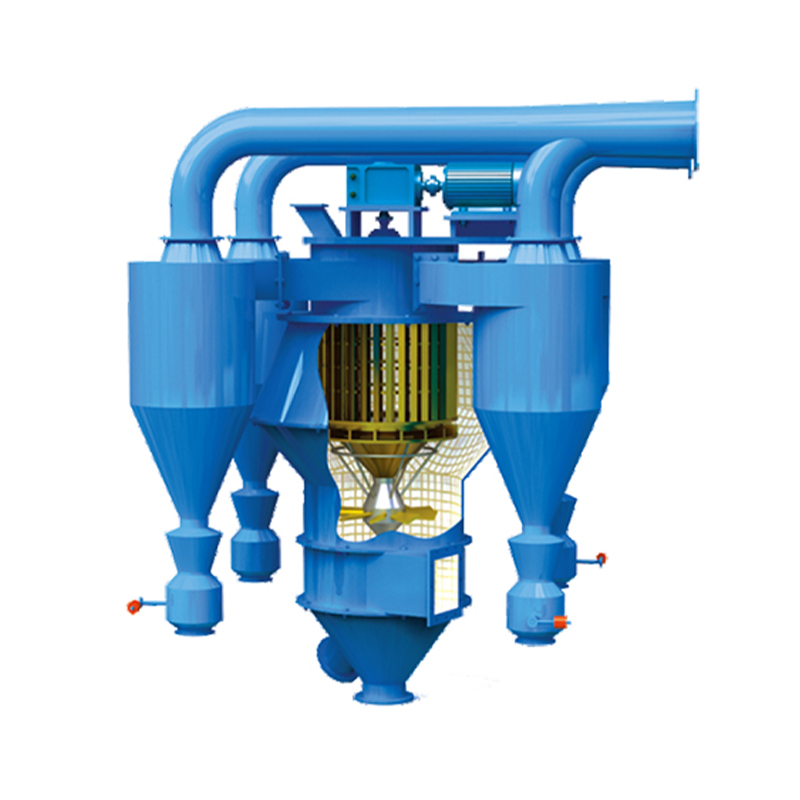
The TS-CX series ultrafine powder classifier draws on international ultrafine powder classification technology and was developed in collaboration with multiple powder engineering research institutes. This equipment utilizes a side-feed, bottom-inlet structure, integrating three classification methods: planar vortex, gravity settling, and centrifugal separation. This results in higher classification efficiency and convenient fineness adjustment within a 200-1000 mesh range. It also simplifies system configuration and significantly reduces energy consumption.

[Feed Particle Size]: ≤0.5mm

[Production Capacity]: 25-320t/h

[Applications]: Cement grinding, new materials, dry mortar, ceramics, rubber, oil extraction, aerospace, etc.

[Applicable Materials]: Cement, calcium-based powder, quartz sand, silica powder, titanium dioxide, silica powder, etc.

send inquiry
Product AdvantagesWorking PrincipleTechnical Specifications

Product Advantages

Compared to traditional powder classifiers, the TS-CX series ultrafine powder classifier offers the following outstanding advantages:

  1. Stable classification principle. Its unique structural design utilizes side-feeding, a downward-moving spreading disc, and downward-inlet airflow, integrating gravity, centrifugal, and planar vortex classification principles to achieve multi-stage separation.
  2. High adaptability. The cage rotor's adjustable speed and air volume accommodate the processing of powders with varying densities and fineness requirements, such as calcium-based desulfurization powder, ultrafine kaolin, titanium dioxide, slag micropowder, ultrafine fly ash, and cement. It can be used as an auxiliary device for closed-circuit grinding systems or as a direct classifier for powders like fly ash.
  3. Convenient fineness control. The classifier's main shaft utilizes stepless speed regulation, enabling convenient fineness control simply by varying the main shaft speed and fan air volume. The adjustment range is wide, and fineness adjustment is convenient, sensitive, and reliable.
  4. Significant energy savings. The entire equipment system adopts a streamlined design, significantly reducing system resistance and achieving significant energy savings.
  5. High powder selection and classification efficiency. The machine achieves a powder selection efficiency of over 85%.
  6. Improved product quality. The finished product surface area can reach over 450 m²/kg, with a 45µm sieve residue of less than 5%.
  7. Long service life. Highly wearable components such as the grading disc, cyclone snail horn, guide vanes, rotor grading vanes, rotor air lock vanes, and coarse powder cone undergo anti-wear treatment. The classifier is lined with a new wear-resistant alloy plate, significantly reducing wear and effectively extending the equipment's service life.
  8. The main shaft lower bearing cooling system utilizes the submarine lubrication design principles of the Tianjin Institute and incorporates imported German seals, effectively addressing the two major issues of lubricating oil leakage and ash intrusion into the bearings, thereby effectively extending the service life of the lower bearing. 9. The whole machine is subjected to dynamic balancing test before leaving the factory to ensure that the grading dynamic balancing accuracy reaches G63 level; the circulating fan equipped with the classifier adopts an integral steel structure foundation and is installed on the foundation with elastic shock-absorbing pads, which reduces the impact of the fan vibration on the foundation and makes the whole machine very stable during operation.

Working Principle

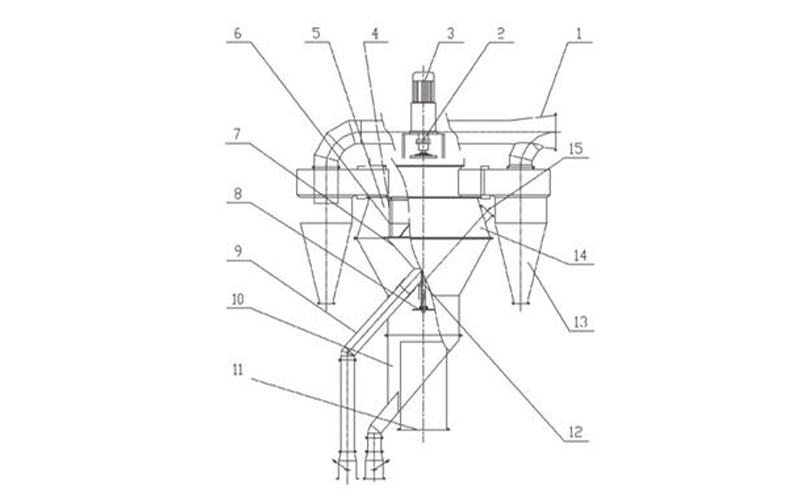
Through improvements, this product now features three distinct sections: powder dispersion, classification, and collection.

  1. Dispersion Section: The spreader tray has been moved from the top of the rotating cage to the bottom of the lower cone, the feed port has been relocated to the outside of the rotating cage, and the air inlet has been moved from the side to the bottom, facing the spreader tray. These improvements have yielded the following benefits:

(1) Effectively separating the dispersion and selection areas eliminates interference between coarse and fine particles during the classification process, preventing small amounts of coarse powder from being blown into the finished product, and narrowing the particle size distribution range. A lower classification zone has been created, reducing the load on the main classification area.

(2) The switch to a lower air inlet increases the material dispersion velocity below the spreader tray, expands the dispersion space, and significantly improves the dispersion of the feed. This also eliminates the uneven air distribution in the classification area caused by side air inlet, reducing wind resistance.

  1. Classification Section: The structural improvements create upper and lower classification zones.

The lower classification zone primarily performs gravity classification. Material is dispersed from the spreading disc and blown upward by the wind. Gravity and wind resistance act on the material, causing coarse particles to descend and finer particles to rise with the wind, resulting in classification. As the fine particles rise with the wind, the expanded cylinder cross-section reduces wind speed, causing some larger particles to change direction and sink, leading to further classification.

In the upper classification zone, the entire flow field is optimized using aerodynamic analysis. A vortex classification zone, composed of curved guide vanes and a cage rotor, is incorporated. This ensures a uniform and stable air flow field on the surface of the classification ring. The relative error in airflow velocity at any point on the same vertical surface is less than 3%, ensuring accurate classification. The airflow, carrying powder, enters between the curved guide vanes and the cage, resulting in centrifugal sedimentation classification. The disc-shaped classification rotor rotates at a constant speed, generating a stable rotating air flow field within the classifier. This swirling airflow acts on the powder, creating a balance between centrifugal force and resistance, achieving ultrafine powder classification.

  1. Collection Zone: Powder collection is performed using a low-resistance vortex cyclone dust collector or an airbox pulse bag dust collector. (Since cyclonic dust collectors cannot collect ultrafine powders, which will result in ultrafine powder circulation, an air box pulse bag dust collector is used to avoid ultrafine powder circulation, increase the ultrafine powder content inthe product, and improve powder selection efficiency. This is the user's choice.)

Technical Specifications

Model Product fineness R0.045(%) Air volume (m³/h) Rotation speed (rpm) Motor power (kw) Maximum processing capacity (t/h) Output (t/h)
TS-CX-I (N250) 45μm square hole screen residue (0 - 10) % 10000 300 - 500 15 27 6-12
TS-CX-II (N350) 15000 280 - 500 18.5 45 10-20
TS-CX-III (N500) 21000 260 - 450 22 60 15 - 25
TS-CX-IV (N750) 30000 260 - 450 30 75 20 - 30
TS-CX-V (N1000) 45000 240 - 420 37 100 30 - 45
TS-CX-VI (N1250) 60000 240 - 420 45 140 40 - 55
TS-CX-VII (N1500) 75000 220 - 400 55 190 50 - 70
TS-CX-VIII (N2000) 90000 220 - 400 75 250 65 - 90
TS-CX-IX (N2500) 105000 200 - 380 90 320 90 - 130
Message Feedback
Jiangsu JND Environmental & Energy Technology Co., Ltd.