

 English
 中文简体
 русский
 Español
 عربى


Powder coating is a dry finishing process in which electrically charged particles of resin and pigment are sprayed onto a grounded part and then baked until those particles melt, flow, and cure into a hard, continuous film. That is the short answer to the question "what is powder coating?" There is no solvent, no liquid carrier, and no flash-off time. The coating arrives as a solid powder and leaves the oven as a tough plastic skin that is often several times thicker than a single coat of wet paint.
If you have ever run a finger along a bicycle frame, a filing cabinet, or the aluminum frame of a window and felt a smooth, slightly waxy surface, you have already touched powder coating. It is one of the most widely used industrial finishes in the world, protecting everything from electrical enclosures to agricultural machinery.
Content
- 1 What Powder Coating Is, in Plain Terms
- 2 What a Coating Powder Actually Contains
- 3 How the Powder Coating Process Works, Step by Step
- 4 Types of Powder Coating
- 5 Powder Coating Versus Liquid Paint
- 6 Where Powder Coating Is Used Today
- 7 Behind the Finish: How Coating Powder Is Ground and Classified
- 8 Common Powder Coating Problems and Their Causes
- 9 Getting the Powder Side of the Process Right
What Powder Coating Is, in Plain Terms
Chemically, a coating powder is a finely ground blend of four groups of ingredients: a resin binder, pigments and fillers, a curing agent, and a small percentage of additives such as flow modifiers, degassing agents, and UV stabilisers. Nothing in the mixture is liquid. The blend is manufactured as a solid, ground to a tightly controlled particle size, and shipped in boxes or fluidised hoppers.
Application is simple in principle. The metal part is grounded, an electrostatic gun charges the powder particles as they leave the nozzle, and the charged particles are pulled onto the grounded surface, where they stick until the oven does its work. A fluidised bed is used instead for certain small parts and heavy wire goods. The coated part then travels through an oven at roughly 180 to 200 degrees Celsius for 10 to 20 minutes, depending on the chemistry and the mass of the part.
Two properties separate powder coating from wet paint. First, the film forms by melting rather than by evaporation: the powder flows into a continuous layer and then crosslinks into a thermoset network. Second, there is essentially no solvent to release, so powders are formulated as zero or near-zero VOC materials, and overspray that misses the part can be collected and reused.
What a Coating Powder Actually Contains
Formulations differ by application, but most thermoset powders follow a similar recipe. The table below shows the typical ranges and the job each component performs.
| Component | Typical share | Function |
|---|---|---|
| Resin binder | 50 to 70 percent | Forms the film and sets durability, flexibility, and outdoor performance |
| Pigments and fillers | 20 to 40 percent | Provide colour, opacity, hardness, and cost control |
| Curing agent | 2 to 10 percent | Reacts with the resin during baking to crosslink the film |
| Additives | 1 to 5 percent | Control flow, degassing, gloss, chargeability, and UV stability |
How the Powder Coating Process Works, Step by Step
- Pretreatment. The part is cleaned, degreased, and given a conversion coating such as iron or zinc phosphate, then rinsed and dried. Adhesion and corrosion performance are decided here, not in the oven.
- Application. Powder is sprayed with a corona or tribo gun, or the part is dipped in a fluidised bed. The target film thickness is usually 60 to 120 microns in a single coat.
- Curing. The part enters a convection or infrared oven and is held until the metal reaches the cure window specified by the powder supplier, typically 10 to 20 minutes at 180 to 200 degrees Celsius.
- Cooling and inspection. After cooling, operators check film thickness, gloss, colour, and adhesion, and touch up any thin areas.
Types of Powder Coating
Thermoset powders
These are the workhorses of the industry. The resin crosslinks during curing and cannot be re-melted, which gives a hard, chemical-resistant film. The common chemistries are:
- Epoxy: excellent chemical and corrosion resistance, but it chalks outdoors, so it is used for indoor parts and pipe coatings.
- Polyester: the standard choice for outdoor exposure, with good UV and gloss retention.
- Hybrid epoxy-polyester: a cost-effective middle ground for indoor decorative parts.
- Polyurethane and acrylic: specified where appearance, hardness, or particular chemical resistance matters.
Thermoplastic powders
Nylon, PVC, polyethylene, and polypropylene powders melt and flow but do not crosslink, so they build much thicker films, often 250 to 500 microns. They are chosen for functional coatings on pipe, valves, and parts that need impact resistance rather than a decorative finish.
Powder Coating Versus Liquid Paint
The comparison below reflects what we see on industrial lines. Powder is not always the answer, but on metal parts that can take the oven temperature, it usually wins on durability per unit of cost.
| Factor | Powder coating | Liquid paint |
|---|---|---|
| Volatile organic compounds | Essentially zero | 250 to 450 grams per litre |
| Transfer efficiency | 90 to 98 percent with reclaim | 30 to 60 percent |
| Single coat thickness | 60 to 120 microns | 20 to 40 microns |
| Overspray | Collected and reused | Hazardous waste |
| Cure time | 10 to 20 minutes | Minutes to hours |
The trade-offs are real. Powder cannot be used on heat-sensitive substrates such as most plastics and wood, colour changes cost production time, and very thin, uniform films are harder to achieve than with a sprayed liquid.
Where Powder Coating Is Used Today
Industry analysts have placed the global powder coating market in the range of USD 12 to 15 billion, growing at roughly 4 to 6 percent a year. The demand comes from a predictable set of sectors:
- Automotive and electric vehicles: wheels, suspension parts, battery trays, and underbody components.
- Architectural aluminum: window frames, curtain walls, and cladding, often specified to AAMA 2604 or 2605 performance levels.
- Appliances and furniture: washing machine housings, refrigerators, office desks, and shelving.
- Agriculture and construction equipment: chassis, frames, and implements that face abrasion and weather.
- Electrical and telecom: enclosures, cabinets, and busbar insulation.
- Job shops and sports equipment: bicycle frames, gym machines, and metal toys.
Behind the Finish: How Coating Powder Is Ground and Classified
The powder in the gun box did not start as powder. Resin, pigment, filler, and additives are dry-blended, then fed into a twin-screw extruder where they are melted and dispersed at 90 to 110 degrees Celsius. The hot material is pressed into thin flakes, cooled into a brittle sheet, and broken into chips. Everything after that point is a size-reduction problem, and it is here that the quality of the final coating is largely decided.
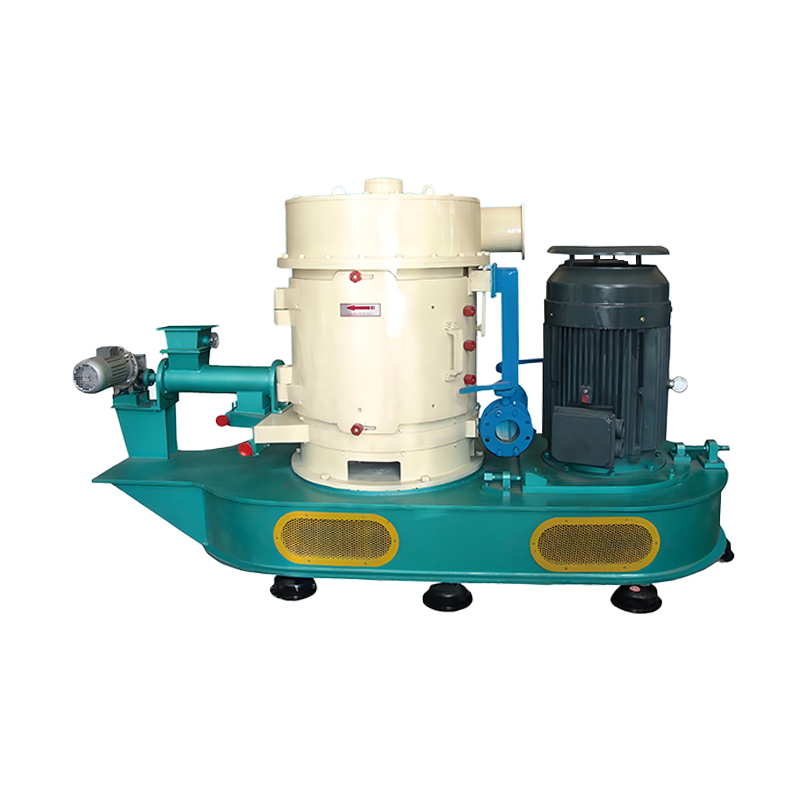
Fine grinding is the heart of the process. Hammer mills handle the coarse stage, while air classifying mills and jet mills produce the finished particle size distribution. Because the resin softens at 50 to 60 degrees Celsius, the mill must remove heat as quickly as it creates it, which is why air flow and cooling design matter as much as rotor speed.
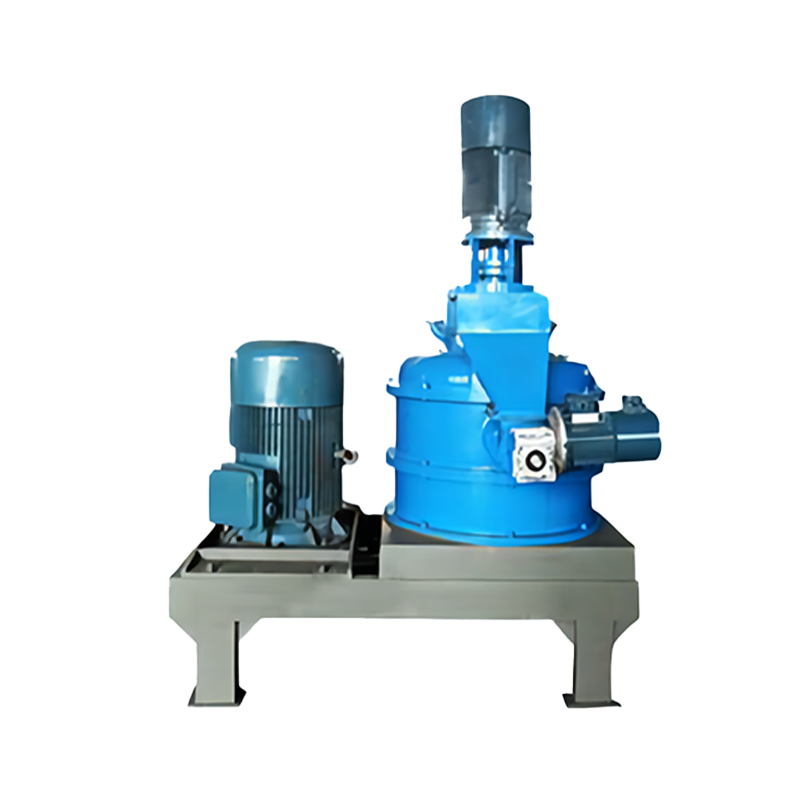 Air Classification MillProduct Particle Size: D50 adjustable between 1.5 and 45 μm.View Product →
Classification is the other half of the job. A powder coating typically has a mean particle size of 30 to 45 microns, with fines below 10 microns kept to a minimum and the coarse tail above 100 microns almost eliminated. Fines cause poor fluidisation and dusty application, while coarse particles produce orange peel and uneven films. Holding a tight cut point is what separates a powder that sprays smoothly at high transfer efficiency from one that creates rejects and rework. If you want to see how that cut point is held in practice, our note on how a dynamic powder classifier works walks through the mechanism.
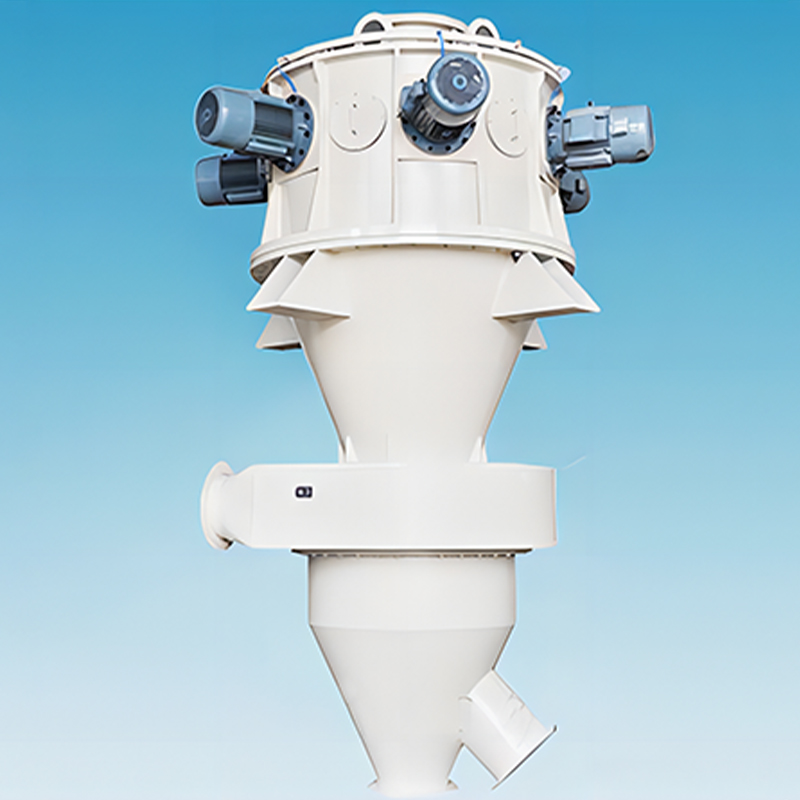 Air classifierProduct Particle Size: D50 ranges from 1 to 45 μm. Classification Efficiency: 60% to 90%. Production Capacity: 1 to 60 t/h.View Product →
Some formulations need one more step. Metallic pigments, waxes, and charge-control additives are bonded to the base particles so they cannot separate during transport or spraying, and modification machines exist specifically for that duty.
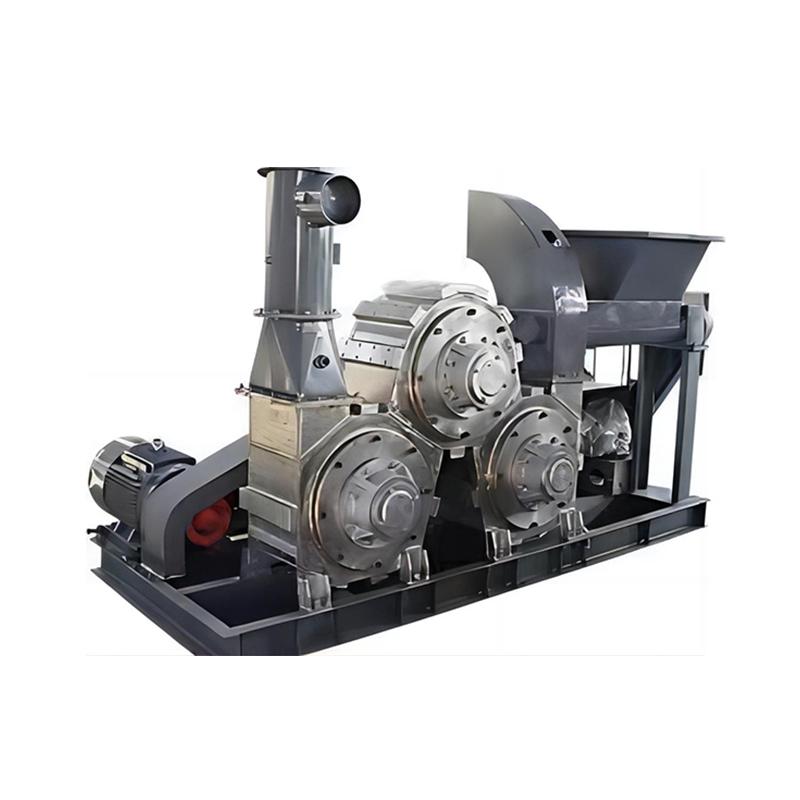 Powder coating and modification machineModifiers and materials are precisely metered and evenly added according to the mixing ratio, ensuring instantaneous accuracy of the mixing ratio. This allows for a hi...View Product →
This is the ground we work on every day. Jiangsu JND has been building grinding, classification, drying, dust collection, and flue gas treatment equipment since 2002, supported by a provincial technology centre, long cooperation with universities such as Southeast University and Tongji University, and ISO 9001, ISO 14001, and OHSAS 18001 certification. Our mills and classifiers serve powder producers as well as the cement, chemical, power, and steel industries, and the same engineering questions come up in all of them: how fine, how uniform, and how consistently.
Common Powder Coating Problems and Their Causes
Most defects trace back to three variables: pretreatment, film thickness, and heat history. The table below lists the faults we hear about most often.
| Defect | Likely cause | Practical fix |
|---|---|---|
| Orange peel | Film too thick, coarse powder, cure too fast | Reduce output, tighten the particle size distribution, slow the ramp |
| Poor adhesion | Oil, scale, or a weak conversion coating | Review degreasing and phosphate stages, verify rinse water quality |
| Pinholes | Trapped air or moisture escaping from the substrate | Preheat the part, use a degassing additive, reduce film thickness |
| Colour shift | Overbaking or an uneven oven load | Check metal temperature, not just oven air temperature |
| Thin coverage in corners | Faraday cage effect | Lower voltage, increase gun distance, consider tribo charging |
Getting the Powder Side of the Process Right
Powder coating is a straightforward idea with a demanding supply chain behind it. The chemistry determines how the film performs, but the particle size distribution determines how it sprays, how much overspray you recover, and how often your line produces rejects. A few microns of drift at the fine end of the distribution can turn a smooth line into a rework line.
If you produce coating powder, or if you process the mineral fillers that go into it, choosing grinding and classification equipment with a stable cut point is the highest-leverage decision you will make. Our team has been sizing mills and classifiers for more than two decades, and we are glad to look at your material, your target distribution, and your capacity before recommending a configuration. Get in touch with our engineers and we will work through the numbers with you.


 Email:ycjnd@163.com
 Telephone:+86-13770001111
 Phone:+86-515-88582588



