

 English
 中文简体
 русский
 Español
 عربى


Powder coating works by electrostatically charging dry polymer particles, spraying them onto a grounded part, and then heating that part until the particles melt, flow together and cure into a continuous film. Nothing evaporates during application, because the powder is 100% solid, so the result is a tough, plastic-like skin that is typically 50 to 100 microns thick in a single pass — roughly two to three times the thickness of one coat of liquid paint.
In practical terms, the answer splits into two halves: what happens inside the coating booth, and what happened to the powder long before it ever reached the spray gun. Most people asking this question are either choosing between powder and paint, or troubleshooting a line that will not hold a consistent finish. Both groups need the same two facts. Adhesion comes from an electric field; durability comes from a chemical cross-linking reaction in the oven. Particle size, pretreatment, grounding and overspray recovery all exist to serve those two mechanisms.
Content
How Powder Coating Works in Plain Terms
A corona spray gun places a high-voltage electrode at its tip, usually somewhere between 60 and 100 kV. As compressed air pushes powder past that electrode, each particle picks up a negative charge. The workpiece is grounded, so it behaves like the opposite pole of a magnet. Charged particles follow the field lines to the surface, and once they land, the residual charge holds them there — long enough, at least, for the part to reach the curing oven.
Some systems use triboelectric charging instead, where friction between the powder and the gun's inner barrel transfers the charge. Tribo guns are popular for parts with deep recesses, because they avoid the Faraday cage effect that keeps corona-charged particles from reaching the inside of tight corners.
Heat finishes the job. In a thermoset powder, the resin and curing agent react in the oven and form a cross-linked network that will not re-melt. That is why a properly cured powder coating resists chipping, chemicals and UV far better than most air-dried paints. A thermoplastic powder, by contrast, simply melts and re-solidifies, which suits thicker films and applications where rework matters more than solvent resistance.
The Five Steps of a Powder Coating Line
Every industrial powder coating operation, from a small job shop to a high-volume appliance plant, follows the same sequence. Skip or shorten a step and the failure shows up months later as chipping, blistering or corrosion creep.
- Pretreatment. Alkaline degreasing, water rinses and a conversion coating — iron phosphate, zinc phosphate or a chrome-free alternative — create the chemical anchor for the film. A well-run pretreatment line can push salt-spray performance from a few hundred hours to well over a thousand.
- Masking and grounding. Threads, mating faces and electrical contact points get masked, and every hanger hook must make clean metal-to-metal contact. A weak ground is one of the most common causes of thin, patchy coverage.
- Application. The gun deposits powder until the film reaches the target thickness. Spray-booth overspray is captured by a cyclone or cartridge recovery unit and blended back into the feed, which is why powder lines routinely recover 95% or more of the material that misses the part.
- Curing. Thermoset powders typically need 180 to 200 °C for 10 to 20 minutes at metal temperature, not just oven air temperature. Undercuring leaves a film that scratches and stains easily; overcuring causes yellowing and loss of gloss. UV-curable powders shorten this step dramatically and open the door to heat-sensitive substrates.
- Cooling and inspection. Film thickness gauges, gloss meters, impact tests and adhesion cross-hatch checks confirm the batch before it ships. Measuring after the part has cooled avoids misleading readings on a soft film.
The Powder Side: How Coating Powder Is Manufactured
Coating powder is engineered, not simply ground pigment. Its recipe combines a resin system with curing agents, pigments, fillers, flow and leveling agents, degassing agents and small amounts of wax. Each ingredient changes how the powder behaves in the gun hopper and how the film flows out in the oven.
- Resin systems: epoxy, polyester, epoxy-polyester hybrid, polyurethane and acrylic
- Functional additives: leveling agents, degassing agents, matting agents and dry-flow additives
- Colorants and effect pigments: organic and inorganic pigments, metallic flakes and mica
Manufacturing starts with dry blending, moves through a melt extruder at roughly 90 to 120 °C, and then cools the melt into flakes. Those flakes are pulverized and classified to a controlled particle size, and only then is the finished powder packed into boxes. The grinding and classification stage decides whether the final product sprays smoothly or spits and surges.
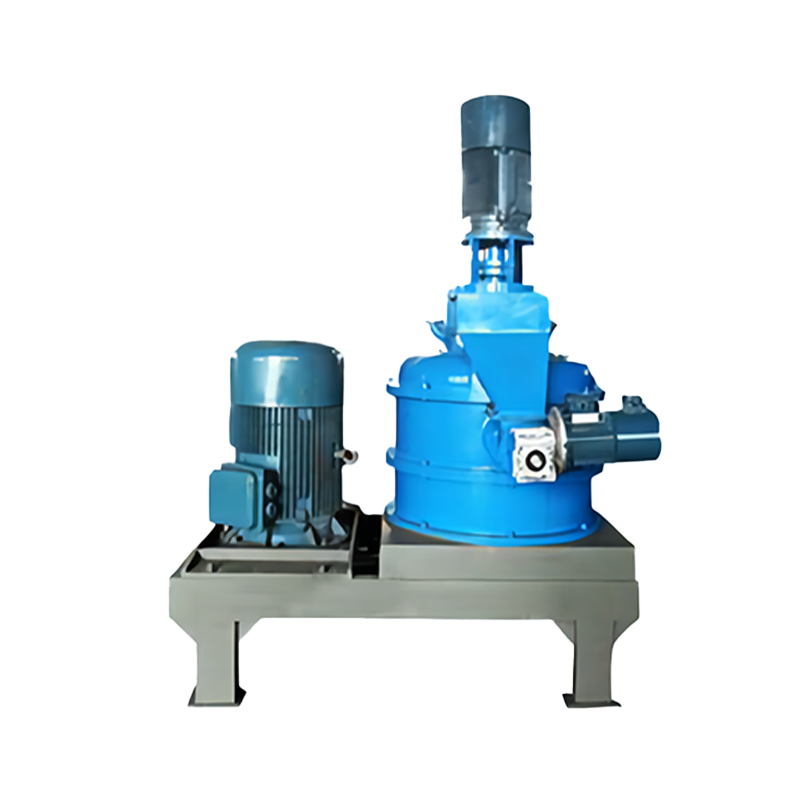
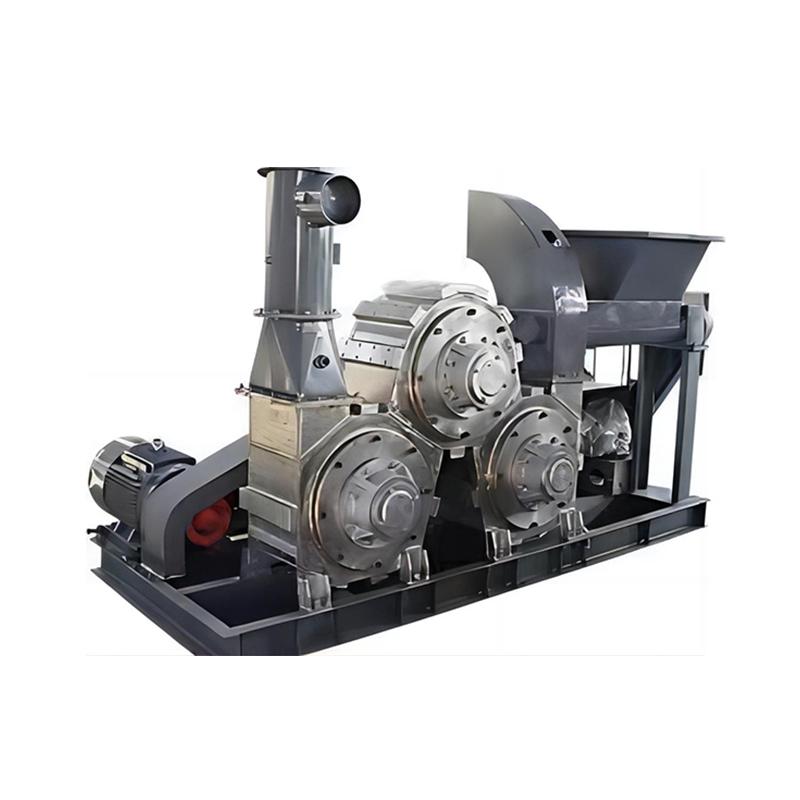 Powder coating and modification machineModifiers and materials are precisely metered and evenly added according to the mixing ratio, ensuring instantaneous accuracy of the mixing ratio. This allows for a hi...View Product →
For bonded metallic and special-effect powders, the pigment has to be fused onto the powder particles rather than mixed in mechanically. That is a surface-modification task, and it is exactly the kind of process our powder coating and modification machine was developed for. Jiangsu JND Environmental & Energy Technology has been building grinding, classification and powder-processing equipment in Yancheng since 2002, so we tend to look at a coating line from the material side first.
Particle Size and Distribution: The Hidden Variable
Ask any experienced coater why one batch produces a mirror-smooth finish and the next looks like orange peel, and the conversation usually turns to particle size distribution. A good electrostatic spray powder has a median diameter of roughly 25 to 45 microns, with the tails carefully trimmed. If you want to see how that cut point is controlled mechanically, our industry note on how a dynamic powder classifier works walks through the separation principle.
| Fraction | Typical size | Effect on application and finish |
|---|---|---|
| Coarse tail | Above 100 microns | Heavy orange peel, uneven film, occasional gun spitting |
| Working cut | 20 to 80 microns | Stable fluidization, reliable charging, smooth cured film |
| Fine tail | Below 10 microns | Dusting, poor fluidization, lower transfer efficiency, higher dust hazard |
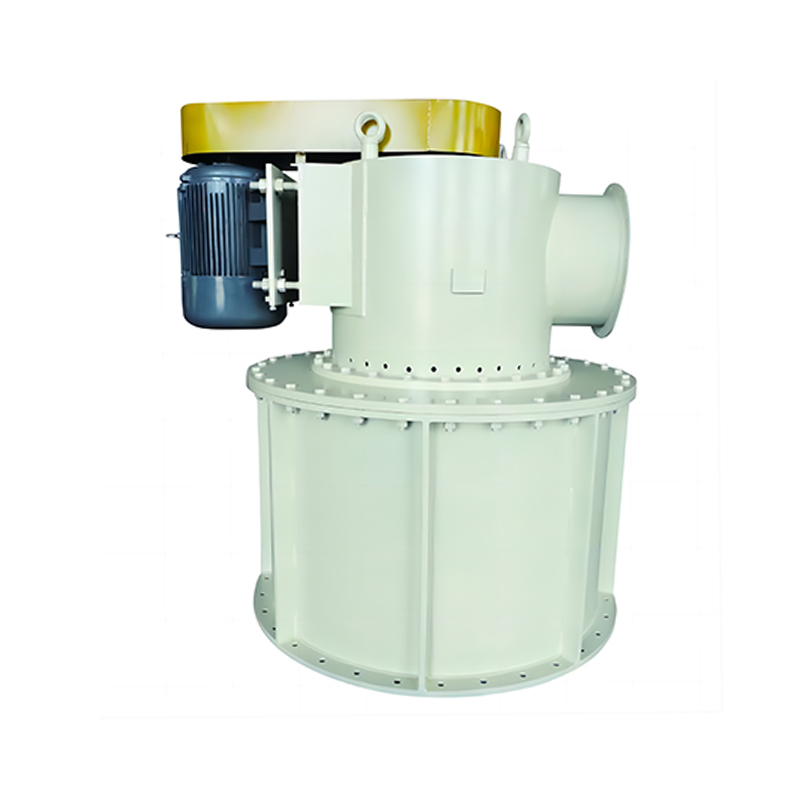
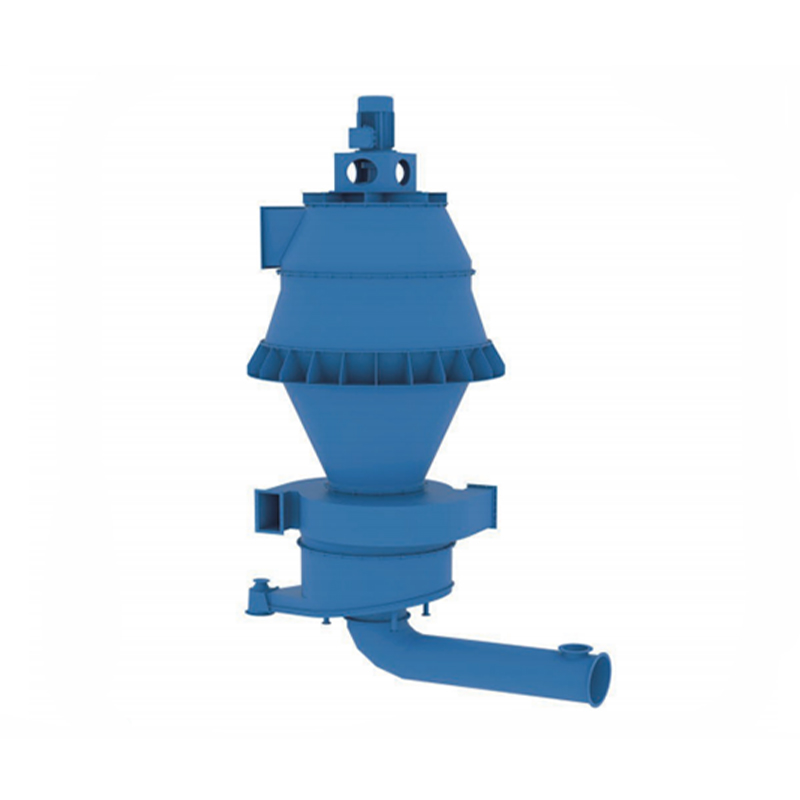 JSP ultrafine powder classifierTo reduce energy consumption and improve system efficiency in cement grinding systems, a combined semi-final grinding process is now widely adopted. The intelligent du...View Product →
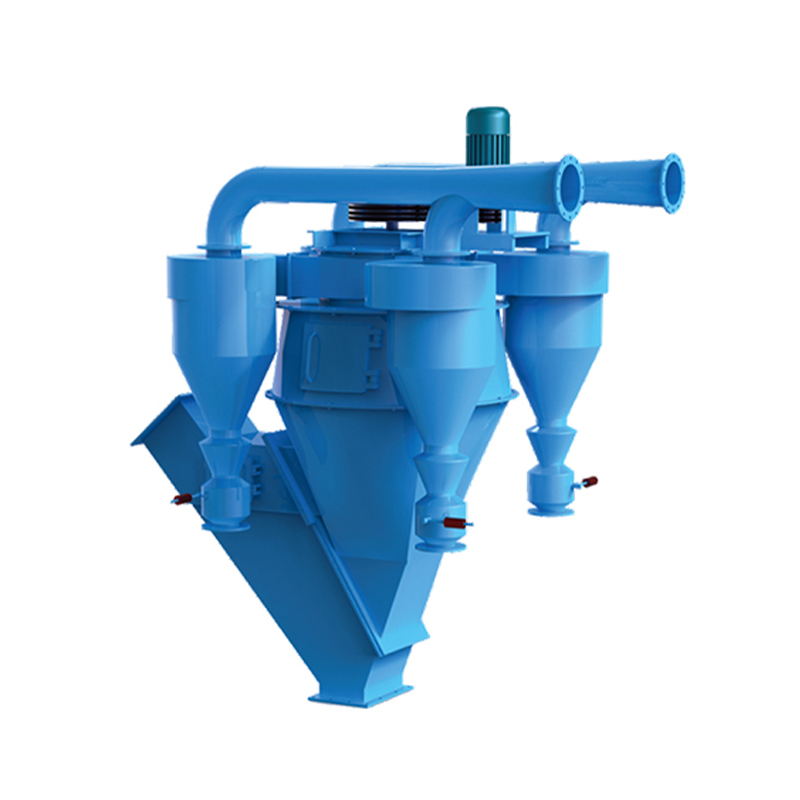
Cutting those tails cleanly is a classification job. Air classifiers and ultrafine rotary classifiers let a powder maker hold a tight distribution batch after batch, which reduces the amount of reclaim that has to be blended back and keeps film appearance consistent from one delivery to the next.
Powder Coating vs. Wet Paint
The two finishes are not interchangeable, and the differences explain why powder dominates so many metal-finishing lines.
| Factor | Powder coating | Liquid paint |
|---|---|---|
| Carrier | None, 100% solids | Solvent or water |
| Film per coat | 50 to 100 microns | 20 to 40 microns |
| Volatile emissions | Near zero | Depends on solids content |
| Overspray | Recoverable and reusable | Mostly waste |
| Curing | Oven or UV cure | Ambient or low bake possible |
| Best-fit substrates | Metals, plus MDF and plastics with special powders | Almost any substrate |
Where powder loses ground is temperature. If a part cannot survive an oven, liquid paint still wins unless a UV-curable or low-temperature powder is available for that substrate.
Dust, Safety and the Recovery Loop
Fine organic powder is combustible, and every coating operation should treat it that way. Booth design, grounding continuity, conductive ducting and explosion venting are governed by standards such as NFPA 652 and 654 in North America and the ATEX directives in Europe. Operators should also watch for powder build-up on ledges and light fixtures, which is where secondary events start.
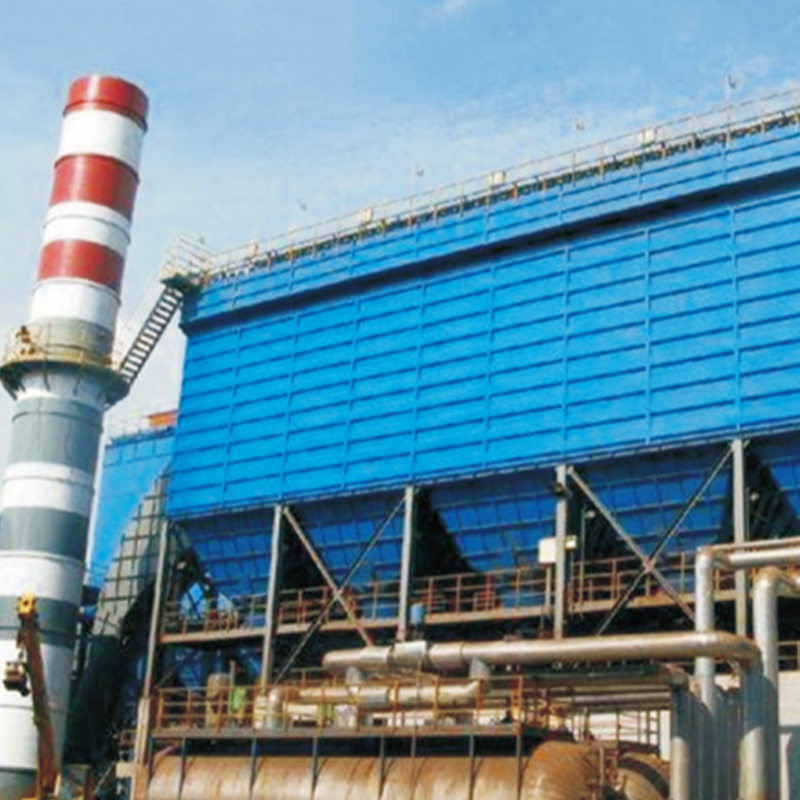
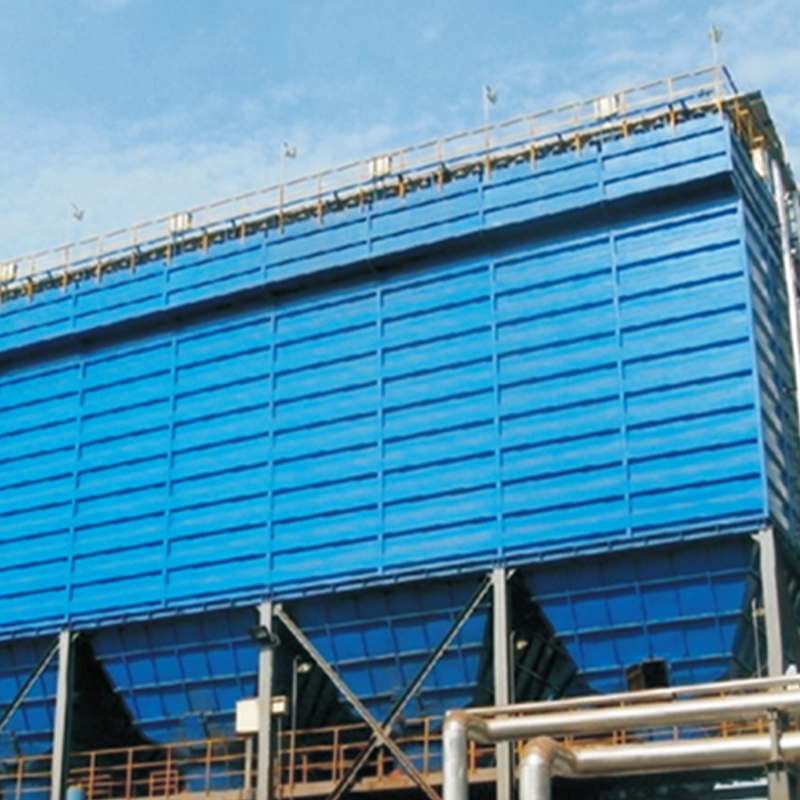 JQM series air box pulse bag dust collectorThe JQM series air-box pulse bag dust collector is a bag dust collector developed by our company based on technology introduced from the US company Fuller, drawing on ...View Product →
On the powder manufacturing side, where mills and classifiers discharge large volumes of fine material continuously, dust collection is a round-the-clock duty rather than an intermittent one. The JQM series air box pulse bag dust collector is the type of unit we size for those grinding and classification circuits, and the same logic applies to any plant handling bulk powder.
- Keep all conductive equipment bonded and grounded
- Use conductive or anti-static filter media in recovery units
- Limit fine-tail content, which is the fraction that stays airborne longest
- Clean ledges, ducts and booth walls on a documented schedule
Common Questions About Powder Coating
Does powder coating always need an oven?
Thermoset powders do. UV-curable powders cure under lamps in seconds to minutes, and low-temperature formulations can cure around 120 to 140 °C, which makes heat-sensitive parts viable.
How thick is a powder coating film?
Most decorative and protective coatings land between 50 and 100 microns. Functional films such as fluidized-bed coatings on pipework or rebar can reach several hundred microns in one pass.
Why does powder coating sometimes look uneven?
Usually one of three causes: a wide particle size distribution, an inconsistent ground path on the hanger, or an oven that is not reaching metal temperature within the specified time.
Is powder coating more durable than paint?
For metal parts that go through proper pretreatment, generally yes. The cross-linked film resists impact, chemicals and UV better than most air-dried paints, and it does not rely on solvent evaporation to form.
Powder coating works because of a simple partnership: an electric field puts the powder where you want it, and heat turns that loose dust into a permanent skin. Everything else — the pretreatment chemistry, the classification cut point, the recovery loop, the dust system — exists to make those two mechanisms reliable at production scale.
If you are specifying equipment for powder production, milling, classification or dust control, our engineers are happy to review your material and your target distribution. Send us your process details and we will come back with a practical recommendation rather than a generic quote.


 Email:ycjnd@163.com
 Telephone:+86-13770001111
 Phone:+86-515-88582588



