

 English
 中文简体
 русский
 Español
 عربى


If you are specifying a fine milling machine, start with the shortest possible answer: choose the mill type by material hardness and target particle size, then compare installed power per tonne, wear cost per tonne, and how stable the product stays after thousands of operating hours. A mill that hits the target in a laboratory test but drifts 15 µm out of range two months into production is not a solution, it is a maintenance project.
Fine milling generally means reducing material to a top size (d97) of roughly 10 µm to 45 µm, while ultrafine milling pushes below 10 µm. Both are governed by one rule: the classifier, not the rotor, decides the final powder. Since 2002, Jiangsu JND Environmental & Energy Technology has designed and manufactured grinding, classification and dust control equipment for the power, chemical, cement and steel industries. This guide covers machine types, material matching, the specifications worth comparing, and the running costs most buyers underestimate.
Content
- 1 What a Fine Milling Machine Does in the Production Line
- 2 The Main Types of Fine Milling Machines and How They Grind
- 3 Matching the Mill to Your Material
- 4 Why a Closed-Loop Mill and Classifier Beats Grinding Harder
- 5 Specifications That Decide Your Return on Investment
- 6 Energy, Wear Parts and Maintenance: the Real Cost per Tonne
- 7 Testing, Commissioning and Dust Safety
What a Fine Milling Machine Does in the Production Line
Crushing stops at millimetres; fine milling starts there. A fine milling machine takes feed that is usually below 10 mm and converts it into a controlled powder, while an internal or external classifier returns oversize particles to the grinding zone. The circuit matters more than the single machine, because a mill without effective classification must over-grind part of the material to meet the specification on the coarse end, and over-grinding is pure energy waste.
| Stage | Typical feed | Typical product | Common equipment |
|---|---|---|---|
| Primary crushing | 300-1,000 mm | 20-100 mm | Jaw or gyratory crusher |
| Secondary crushing | 20-100 mm | 0-25 mm | Cone or impact crusher |
| Fine milling | 0-10 mm | d97 10-45 µm | Air classifying mill, ball mill with classifier |
| Ultrafine milling | 0-1 mm | d50 1-10 µm | Jet mill, vibrating mill, stirred media mill |
The boundaries between stages are practical rather than theoretical. If your product is a filler at d97 40 µm, you do not need jet milling. If it is a battery material at d50 3 µm, an air classifying mill alone will struggle to reach it economically.
The Main Types of Fine Milling Machines and How They Grind
Four families cover most fine milling duty in minerals, chemicals, cement and power plants, and each has a different cost structure and a different tolerance for hard, abrasive or heat-sensitive material.
Air Classifying Mills: Impact Grinding With a Built-In Classifier
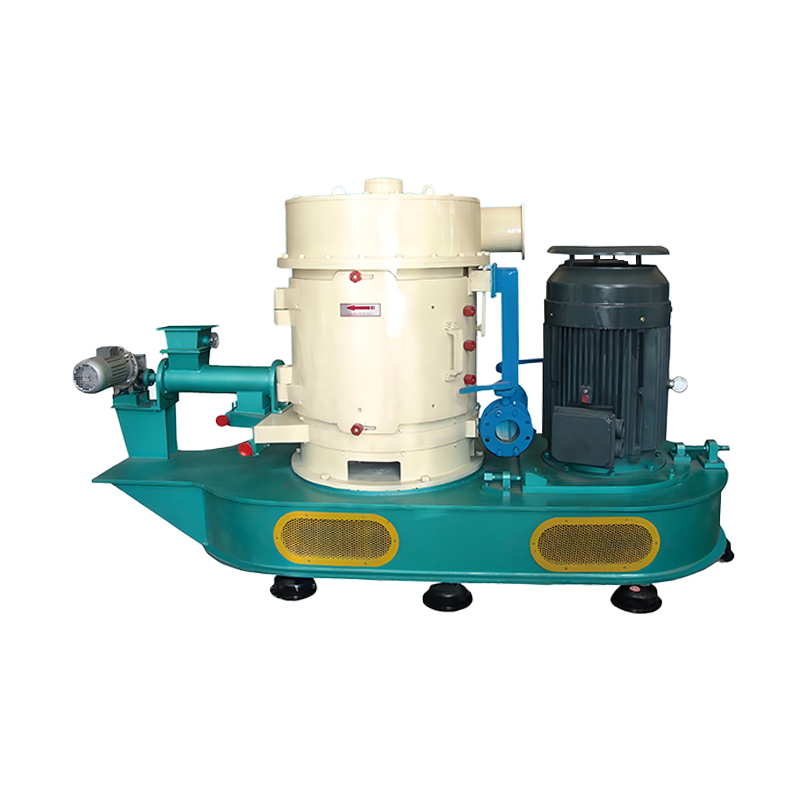
A high-speed rotor, usually with tip speeds of 80-120 m/s, throws material against a wear liner while an integrated dynamic classifier rejects coarse particles back into the grinding zone. Typical products run from d97 10 µm to 45 µm, and the cut point can be adjusted by classifier speed without stopping the mill. These machines handle medium-hard minerals such as limestone, calcite and talc, and they are often the most economical one-machine solution.
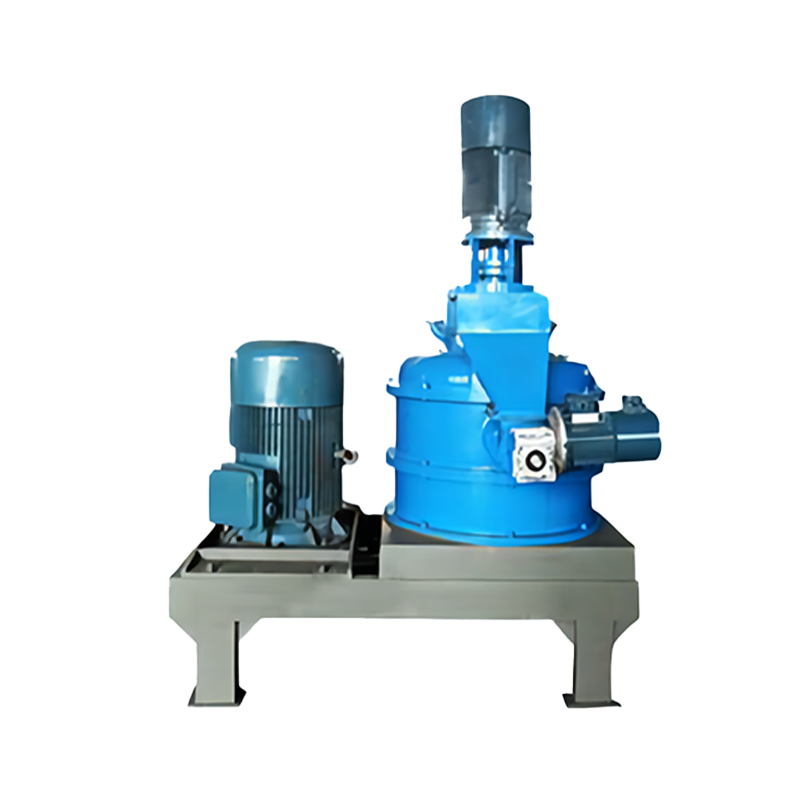 Air Classification MillProduct Particle Size: D50 adjustable between 1.5 and 45 μm.View Product →
Jet Mills: Fluidized Bed, Disc Jet and Steam Kinetic
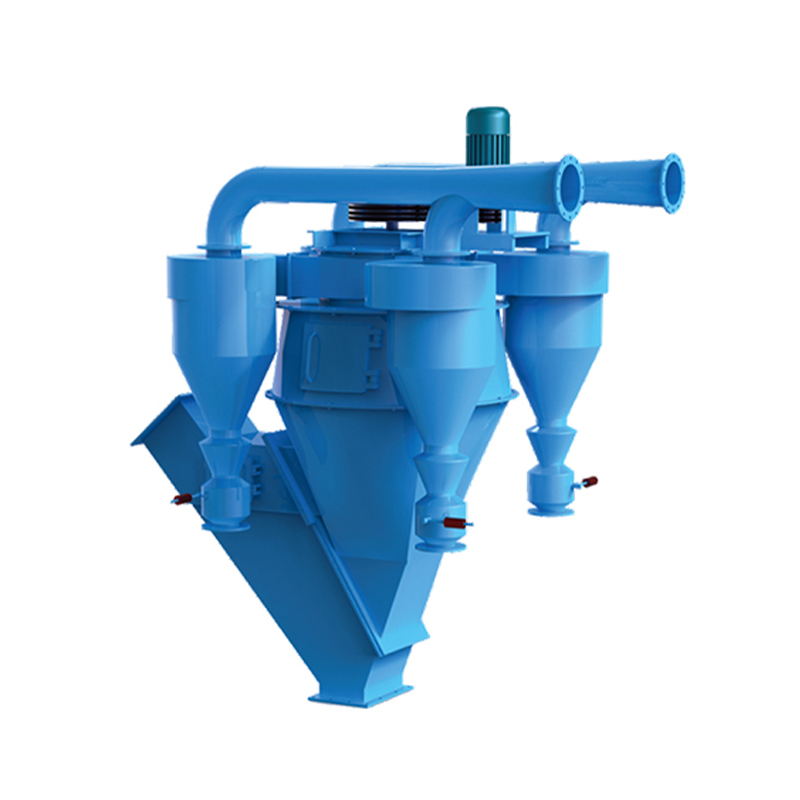
Jet mills accelerate particles with compressed air or superheated steam until they fracture on impact, with no grinding media and therefore almost no contamination. Fluidized bed jet mills and disc jet mills reach d50 values of 1-5 µm, which is why high-purity chemicals and battery materials rely on them. The trade-off is energy: compressed-air jet milling can consume several hundred kWh per tonne, while steam kinetic mills reduce that figure substantially at larger capacities.
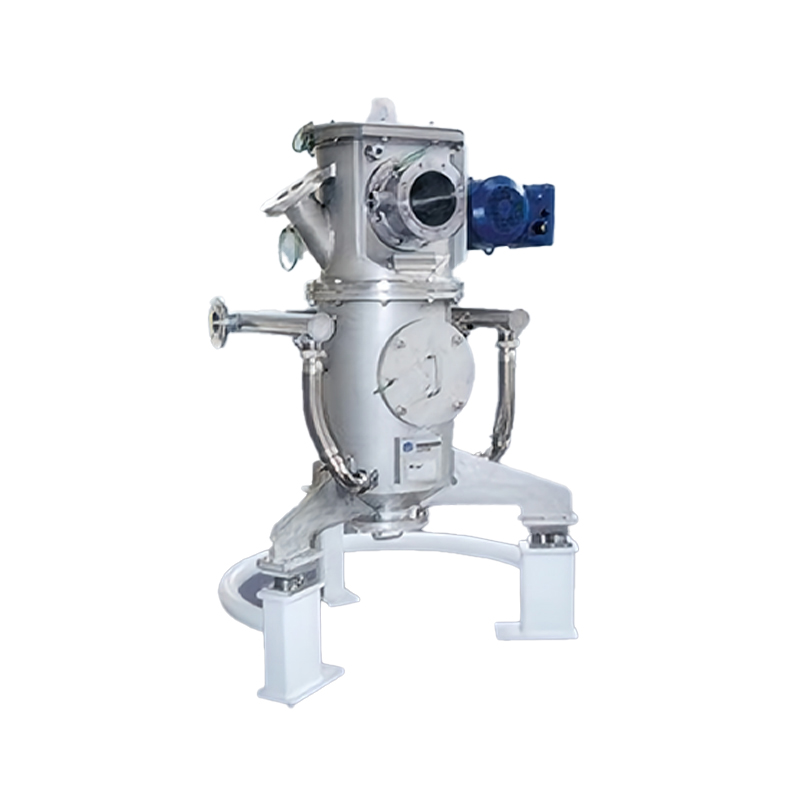 Fluidized bed jet millProduct Particle Size: D50 adjustable between 1 and 45 μm. Production Capacity: 0.1-10 t/hView Product →
Media Mills: Vibrating, Stirred and Ball Mill Circuits
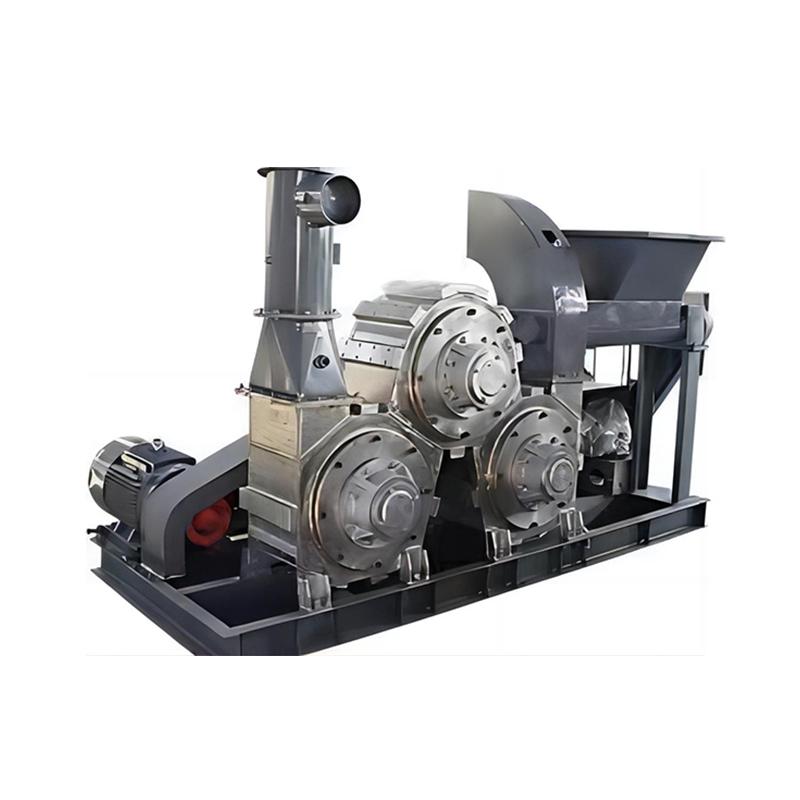
When the material is hard (Mohs 6-7 and above) or the target is below 10 µm, media mills take over. Vibrating mills shake a loaded chamber of grinding media at high frequency and reach fine sizes with a smaller footprint than a ball mill of equal capacity. Ball mill and classifier production lines remain the workhorse for large tonnages: feed below 20 mm, product around d97 10-45 µm, and capacities from a few tonnes to well over 100 tonnes per hour.
Rotor, Hammer and Pin Disc Mills for Softer Feed
For softer or fibrous materials, hammer mills, pin disc mills and rotor mills for pulverization deliver high throughput at d97 30-150 µm. Rotor mills configured for drying and disintegration combine grinding with moisture removal, which helps when surface moisture would otherwise blind the classifier.
Matching the Mill to Your Material
Mill selection fails most often because one material property was ignored. Five questions settle most cases:
- Hardness (Mohs). Below 3-4, an air classifying mill or rotor mill is usually enough; above 6, plan for media mills or ceramic-lined circuits.
- Feed moisture. Above 2-3% surface moisture, classifiers start to blind, so add a drying step or choose a mill that dries while it grinds.
- Target particle size. d97 45 µm and d50 3 µm are different projects with different capital and energy costs.
- Contamination tolerance. Pigments, food additives and battery materials usually require jet mills or ceramic-lined media.
- Abrasiveness. Highly abrasive feed wears rotor tips quickly, so specify tungsten carbide or ceramic where it matters.
As a rule of thumb, match the mill to the hardest and wettest condition you expect in normal operation, not to the best sample your supplier receives.
Why a Closed-Loop Mill and Classifier Beats Grinding Harder
Many plants try to reach a finer specification by slowing the feed or running the mill longer. That approach usually raises specific energy by 20-40% and still produces an unstable product. The better answer is a closed circuit, where the classifier cut point is set by the specification and the coarse fraction is recycled to the mill.
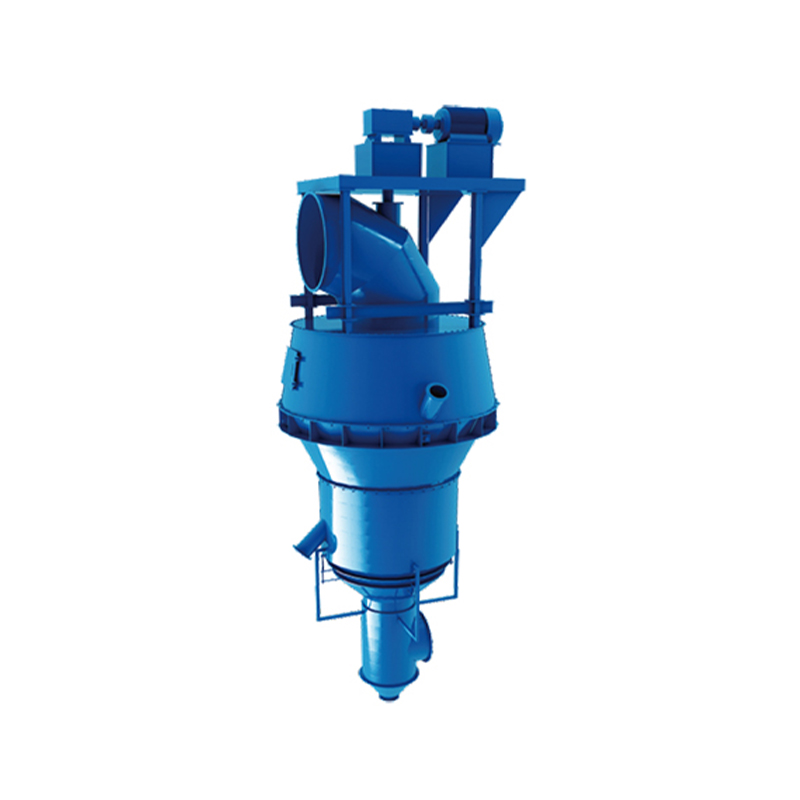
A ball mill and classifier production line shows the logic clearly: the mill performs the bulk size reduction, the classifier takes responsibility for the final particle size distribution, and a circulating load of 200-300% keeps the mill full without over-grinding. Because the classifier can be adjusted independently, you can move from d97 45 µm to d97 20 µm by changing parameters instead of rebuilding the plant.
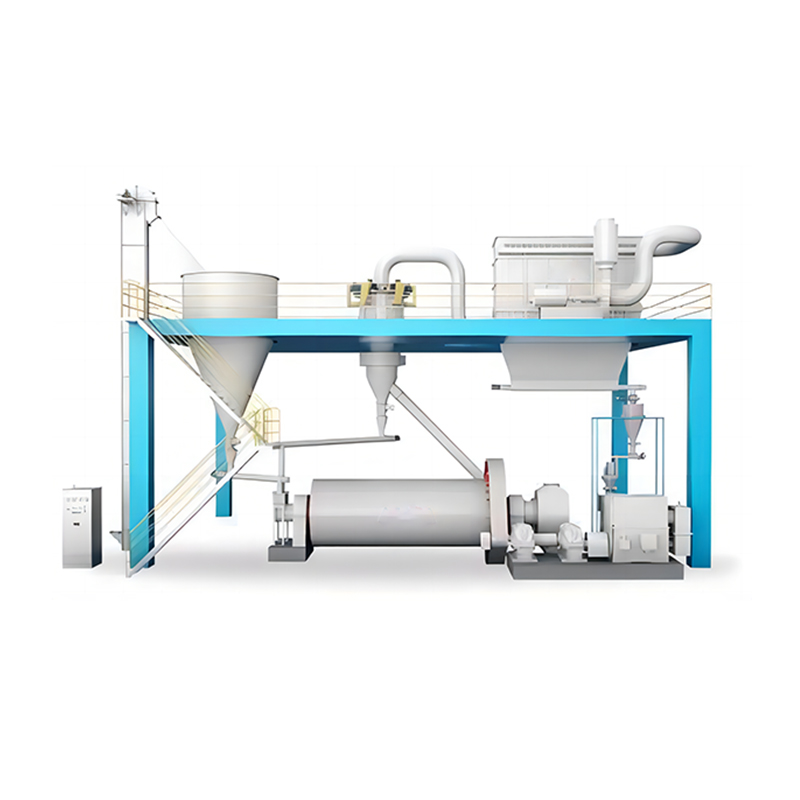 Ball mill and classifier production lineProduct Particle Size: D50 ranges from 1 to 45 μm.View Product →
Two numbers show whether a circuit is well matched: the circulating load, where too little starves the mill and too much loops energy, and the quantity of finished-size material leaving with the coarse return stream.
Specifications That Decide Your Return on Investment
Quotations are rarely comparable line by line. Normalising the key figures per tonne of finished powder removes most of the confusion.
| Specification | What good looks like | Why it matters |
|---|---|---|
| Specific energy | 20-60 kWh/t at d97 20-45 µm on medium-hard minerals | Energy is 40-70% of milling cost |
| Classifier control | Variable speed with a repeatable cut point | Holds the specification without over-grinding |
| Wear parts | Replaceable blades, liners and media in high-chrome or ceramic | Controls cost per tonne and downtime |
| Feed moisture limit | A stated limit, or an integrated drying step | Prevents caking and mill plugging |
| Dust emission | Below 10 mg/Nm³ with a matched bag filter | Compliance and product recovery |
Ask for guaranteed values tied to a defined test method, such as laser diffraction with dry dispersion, and to a stated feed size and moisture. A fineness guarantee without those conditions is not a guarantee.
Energy, Wear Parts and Maintenance: the Real Cost per Tonne
On most fine milling installations, electricity accounts for 40-70% of operating cost, wear parts 10-25%, and labour the remainder. That ratio explains why a cheaper mill with a coarse-cut classifier often ends up more expensive: over-grinding can add 15-25 kWh to every tonne of finished powder.
Wear part life varies widely with abrasiveness. On medium-hard minerals, high-chrome rotor tips and classifier blades typically last 3-12 months; on quartz or slag, plan for shorter intervals and keep a spare set on site. Blade and liner replacement usually takes one shift when the machine is designed for good access, so check that the grinding chamber opens without dismantling the drive train.
Testing, Commissioning and Dust Safety
Before committing capital, run a sample test on 20-50 kg of your own material, not on a reference sample from another plant. A practical test protocol looks like this:
- Send a representative sample with its moisture content and origin recorded.
- Request at least three test points around the target fineness, with measured specific energy.
- Verify the particle size distribution by laser diffraction and check for agglomeration or classifier coating.
- Record temperature rise and any change in product colour or chemistry.
- Confirm the guarantee conditions: feed size, feed moisture and the measurement method.
Commissioning follows the same discipline. Feed the mill steadily, set the classifier to the specification rather than to the finest possible cut, and connect the dust collector before the first tonne is ground. Fine powders behave like liquids; if the collecting system is undersized, product ends up on the floor and in the filter bags instead of in the silo. For combustible dusts, review venting, grounding and inert gas options with your safety team before start-up.
Fine milling rewards preparation. Fix the specification, match the machine to the material, and compare energy and wear cost per tonne instead of motor size. That is the difference between a mill that pays for itself and one that keeps appearing in your maintenance budget.
Jiangsu JND has been building grinding, classification and dust control equipment since 2002, with ISO 9001, ISO 14001 and OHSAS 18001 certification and a provincial technology centre supported by long-term cooperation with universities including Southeast University and Tongji University. You can review representative installations in our project cases, or send your material details to our engineers through the contact page for a sizing recommendation and a test plan.

 Email:ycjnd@163.com
 Telephone:+86-13770001111
 Phone:+86-515-88582588



