

 English
 中文简体
中文简体 русский
 Español
 عربى
عربى

A Vertical Shaft Impact Crusher is a rock crushing machine that feeds material into a high speed rotor and throws it outward at the rotor tip, so particles break apart on impact with other particles or with a wear resistant lining rather than being squeezed between two metal surfaces. The rotor tip speed typically reaches 45 to 65 meters per second, and this rock on rock or rock on metal impact action produces cubical particle shapes with sharp, well defined edges, which is why a Vertical Shaft Impact Crusher is the standard final stage machine for producing manufactured sand and high quality aggregate.
Content
- 1 Main Components of a Vertical Shaft Impact Crusher
- 2 Working Principle and the Three Crushing Modes
- 3 Common Types of Vertical Shaft Impact Crushers
- 4 VSIN1 Series Sand Making Machine Overview
- 5 Product Advantages of the VSIN1 Series Crusher
- 6 Industrial Applications of Vertical Shaft Impact Crushers
- 7 Key Parameters When Selecting a Vertical Shaft Impact Crusher
- 8 Maintenance Guidance for Long Term Reliability
- 9 Common Problems and Practical Troubleshooting
- 10 Recent Developments in Vertical Shaft Impact Crusher Technology
- 11 Frequently Asked Questions About Vertical Shaft Impact Crushers
- 11.1 What is a Vertical Shaft Impact Crusher used for
- 11.2 How is a Vertical Shaft Impact Crusher different from a jaw or cone crusher
- 11.3 What feed size can the VSIN1 series accept
- 11.4 Which materials can be processed with a Vertical Shaft Impact Crusher
- 11.5 Why does crushing mode selection matter
- 11.6 How much can a modern crusher design reduce operating costs
Main Components of a Vertical Shaft Impact Crusher
A Vertical Shaft Impact Crusher is built around a small number of parts that work together to accelerate and separate material at high speed.
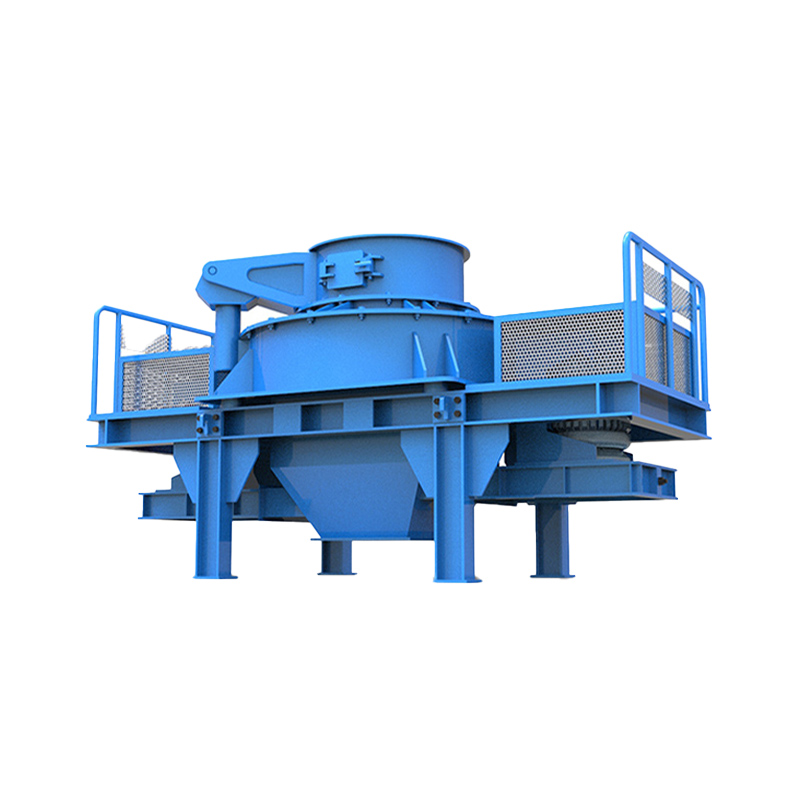
- High speed rotor, mounted on a vertical shaft, that accelerates incoming feed material outward through distribution channels
- Throwing head or distribution plate, positioned at the center of the rotor, that splits and directs feed material into the acceleration channels
- Crushing chamber and wear liners, surrounding the rotor, where flying particles strike a rock shelf, metal anvils, or each other
- Dual feed tray and hopper, controlling how much material enters the center of the rotor and how much falls around the outside as cascade feed
- Main shaft seal and drive system, including the bearing assembly, drive motor, and belt or direct drive coupling that spins the rotor
Working Principle and the Three Crushing Modes
Feed material enters the top of the machine and drops onto the spinning throwing head, which flings the material outward through the rotor at very high velocity. What happens next depends on which crushing mode the machine is set up to run, and most modern machines including the VSIN1 series sand making machine are built to switch between all three.
Three crushing modes explained
- Stone on stone crushing, where the crushing chamber is lined with a built up shelf of the material itself, so flying particles impact against a bed of the same rock rather than metal, which reduces wear cost
- Stone on metal crushing, where the chamber is lined with wear resistant metal anvils, giving a higher reduction ratio and sharper cubical shape but consuming wear parts faster on abrasive material
- Combined center feed with cascade feed, splitting the incoming stream so part goes through the rotor for full velocity impact while part falls directly into the chamber as a cushioning cascade layer, balancing shape quality against wear rate
Common Types of Vertical Shaft Impact Crushers
Vertical Shaft Impact Crushers are generally grouped by rotor design and feed arrangement, and the right type depends on feed hardness, target shape quality, and how much circulating fines the plant can accept.
| Type | Feed Arrangement | Best For | Common Placement |
|---|---|---|---|
| Full center feed rotor | All material through the rotor | Maximum cubical shape and fine sand output | Final stage manufactured sand production |
| Center plus cascade feed rotor | Split between rotor and outer chamber | Balanced shape quality with reduced wear | General aggregate shaping duty |
| Deep cavity rotor design | Enlarged internal rotor cavity | Higher throughput per rotor revolution | High capacity sand and gravel plants |
VSIN1 Series Sand Making Machine Overview
The VSIN1 series sand making machine is a new generation Vertical Shaft Impact Crusher developed from the earlier VSI sand making machine platform, built using German technology and covered by multiple proprietary intellectual property rights. It integrates all three crushing modes in one unit, which is why it has become a core piece of equipment across the manufactured sand industry.
| Parameter | Specification |
|---|---|
| Feed size | 30 to 50 millimeters |
| Production capacity | 70 to 640 tonnes per hour |
| Applicable materials | River pebbles, quartz stone, limestone, coal gangue, basalt, granite, diabase |
| Application fields | Sand and gravel yards, mixing plants, dry mortar, quartz sand, construction waste, highway and railway aggregate, high rise building and municipal projects, hydropower dam construction, concrete mixing plants |
Product Advantages of the VSIN1 Series Crusher
Optimized design reduces production costs
The modular throwing head design only requires replacement of worn parts rather than the entire assembly, reducing operating costs by over 30 percent. The peripheral guard plate can be reversed and reused once one side wears down, increasing material utilization by over 48 percent, and diamond shaped impact blocks protect the vertical plate from damage caused by material impact wear.
Higher throughput and higher output
An optimized deep cavity rotor increases material throughput by approximately 30 percent. The smoother curved design of the ejection port and internal flow path reduces material flow resistance, which improves material throughput and increases overall machine production capacity.
Convenient and safe operation
The dual purpose bulk feed tray is easy to operate and allows quick switching between full center feed and center feed with annular cascade feed. The machine uses a low noise, high protection motor built with F class insulation and an IP54 or IP55 protection rating, supporting safer operation in dusty plant environments.
Special seal design for easy maintenance
A special seal structure at the lower end of the main shaft eliminates the need for an oil seal, preventing oil leakage and reducing fuel consumption. A hydraulic cover opening mechanism imported from Japan allows the upper cover to be removed quickly, saving time, labor, and effort when replacing or repairing internal components.
Industrial Applications of Vertical Shaft Impact Crushers
A Vertical Shaft Impact Crusher is installed wherever a plant needs cubical, well shaped aggregate or manufactured sand rather than the elongated or flaky particles produced by compression crushers alone.
- Sand and gravel yards and mixing plants, producing manufactured sand as a substitute for natural river sand
- Dry mortar and quartz sand production, where consistent particle shape affects mix workability and strength
- Construction waste recycling, turning demolition rubble into usable aggregate for new construction
- Highway and high speed railway aggregate, where cubical shape improves compaction and load bearing performance
- High rise building and municipal projects, supplying concrete aggregate that meets shape and gradation requirements
- Hydropower dam construction and concrete mixing plants, where large volume aggregate supply depends on continuous, high capacity crushing
Key Parameters When Selecting a Vertical Shaft Impact Crusher
Choosing the right Vertical Shaft Impact Crusher depends on matching several operating parameters to the feed material and the target product rather than looking at rated capacity alone.
Feed hardness and abrasiveness
Highly abrasive material such as quartz stone or basalt wears rotor tips and impact plates faster, so confirm whether the machine offers a stone on stone mode to reduce reliance on metal wear parts for these harder feeds.
Target particle shape and fineness
Full center feed produces the most cubical shape and the finest sand fraction, while a center plus cascade split reduces shape quality slightly in exchange for lower wear part consumption, so match the feed mode to what the finished product specification actually requires.
Rotor tip speed and drive power
Rotor tip speed controls reduction ratio and shape quality, and higher tip speed requires correspondingly higher drive motor power, so confirm the motor rating matches the rotor speed range needed for the target feed and product size.
Maintenance Guidance for Long Term Reliability
A Vertical Shaft Impact Crusher runs at high rotational speed continuously, so a defined maintenance routine keeps particle shape consistent and prevents unplanned downtime.
- Inspect the throwing head and impact blocks regularly for wear, since worn distribution channels change how evenly material is thrown outward
- Check the main shaft seal for signs of leakage, since a failing seal allows oil consumption to rise and can lead to bearing damage over time
- Monitor the peripheral guard plate and rotate or reverse it once one face shows significant wear, extending its usable service life
- Verify rotor balance during scheduled stops, since an unbalanced rotor increases vibration and accelerates bearing wear
- Clear the feed hopper and dual purpose feed tray of blockages, particularly when processing damp or sticky construction waste material
Common Problems and Practical Troubleshooting
| Problem | Likely Cause | Suggested Action |
|---|---|---|
| Product shape becoming more elongated | Worn throwing head or reduced rotor speed | Inspect the throwing head for wear and confirm actual rotor speed against the design setpoint |
| Excessive vibration during operation | Rotor imbalance or uneven wear on impact blocks | Stop the machine and check rotor balance and impact block wear pattern |
| Oil leakage near the main shaft | Worn or damaged main shaft seal | Inspect the special seal structure and replace it before bearing damage occurs |
| Reduced production capacity | Blocked feed tray or worn deep cavity rotor | Clear the feed path and inspect the rotor cavity for buildup or wear |
Recent Developments in Vertical Shaft Impact Crusher Technology
Recent improvements to Vertical Shaft Impact Crushers have focused on practical operating gains rather than a change to the basic impact crushing principle.
Modular wear part design
Modular throwing heads and reversible guard plates, as used in the VSIN1 series, let operators replace only the worn component instead of the full assembly, which directly lowers operating cost and reduces the frequency of full rotor changeouts.
Deep cavity rotor geometry
Enlarged internal rotor cavities are increasing material throughput per revolution across newer crusher models, allowing higher production capacity without a proportional increase in rotor diameter or drive power.
Faster maintenance access
Hydraulic cover opening mechanisms are reducing the time needed to access the crushing chamber for wear part replacement, cutting planned maintenance downtime compared with older bolted cover designs.
Frequently Asked Questions About Vertical Shaft Impact Crushers
What is a Vertical Shaft Impact Crusher used for
A Vertical Shaft Impact Crusher is used to shape and reduce rock, ore, and recycled construction material into cubical aggregate or manufactured sand, and it is typically installed as the final crushing stage in a plant rather than as the primary crusher handling large run of mine feed.
How is a Vertical Shaft Impact Crusher different from a jaw or cone crusher
A jaw or cone crusher reduces particle size by compression between two hard surfaces, while a Vertical Shaft Impact Crusher relies on impact energy from a high speed rotor, which produces a more cubical particle shape better suited to concrete aggregate and manufactured sand.
What feed size can the VSIN1 series accept
The VSIN1 series sand making machine accepts a feed size of 30 to 50 millimeters and delivers production capacities ranging from 70 to 640 tonnes per hour depending on the material and the crushing mode selected.
Which materials can be processed with a Vertical Shaft Impact Crusher
Typical materials include river pebbles, quartz stone, limestone, coal gangue, basalt, granite, and diabase, covering applications from manufactured sand production to highway, railway, and hydropower construction aggregate.
Why does crushing mode selection matter
Stone on stone crushing reduces wear cost on abrasive feed by building a cushioning layer of the material itself, stone on metal crushing gives a higher reduction ratio for harder shaping requirements, and a combined center feed with cascade feed mode balances shape quality against wear part life.
How much can a modern crusher design reduce operating costs
A modular throwing head design that only requires replacing worn parts rather than the full assembly can reduce operating costs by over 30 percent, and a reversible peripheral guard plate can increase material utilization by over 48 percent compared with older fixed wear part designs.

 Email:ycjnd@163.com
 Telephone:+86-13770001111
 Phone:+86-515-88582588


