Wholesale JVM Series Vertical Mill
Home / Equipment / Pulverization Equipment / JVM Series Vertical Mill
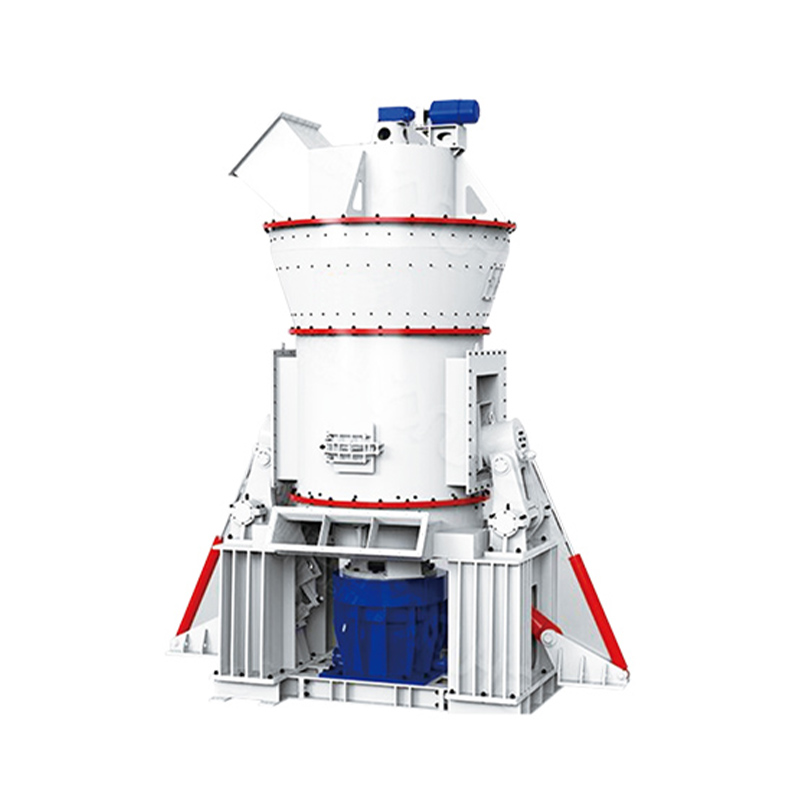
JVM Series Vertical Mill
  • JVM Series Vertical Mill

JVM Series Vertical Mill

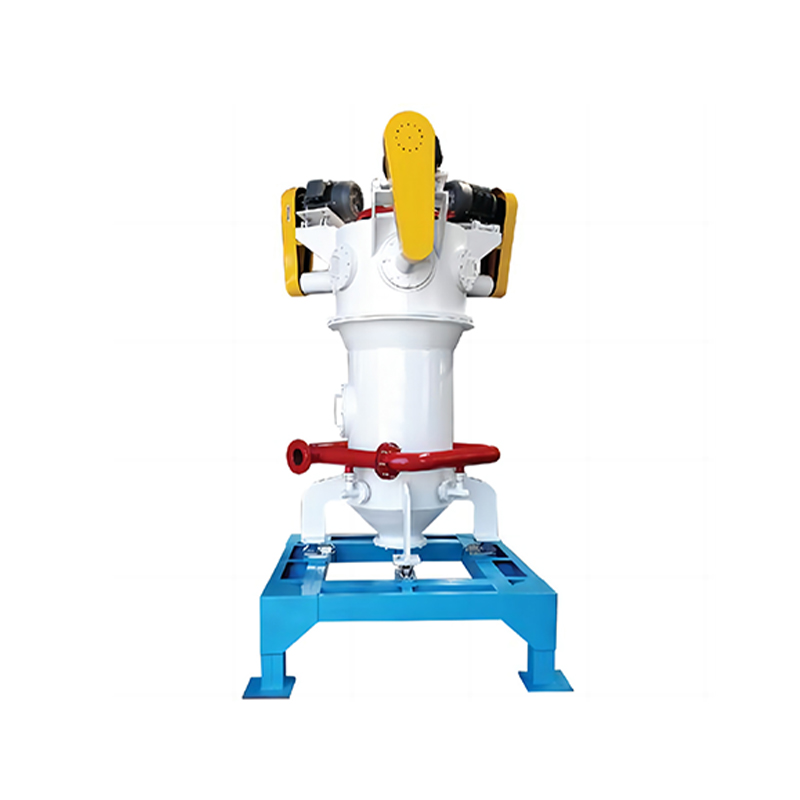
The JVM series vertical grinding mill, developed and designed based on extensive technical expertise from renowned companies and incorporating our company's over a decade of experience in grinding equipment manufacturing, integrates five key functions: crushing, grinding, powder selection, drying, and conveying. It features a simple process flow, small footprint, low investment, high efficiency, and low operating costs.

[Feed Particle Size]: ≤55mm

[Production Capacity]: 10-55t/h

[Applications]: Grinding materials in the cement, power, metallurgy, chemical, and mineral processing industries.

[Applicable Materials]: Cement, coal, feldspar, calcite, talc, fluorite, iron ore, copper ore, phosphate rock, graphite, quartz, slag, etc.
send inquiry
Product AdvantagesWorking Principle

Product Advantages

    1.Low Investment Cost
    Small Footprint: Integrating crushing, drying, grinding, and grading and conveying into one system, the system features a simple and compact layout, occupying approximately 50% of the floor space of a ball mill system. Furthermore, it can be installed outdoors, significantly reducing investment costs.
    High Drying Capacity: Direct internal hot air contact with the material delivers high drying capacity, eliminating the need for a dryer, saving space, and energy. Adjustable hot air temperature allows for easy handling of materials with varying moisture levels.

    2.Low Operating Cost
    Low Wear: Since the grinding rollers do not come into direct contact with the grinding disc during operation, and the rollers and linings are made of high-quality materials, they offer a long service life and minimal wear.
    Low Energy Consumption for Grinding: The grinding rollers directly crush the material against the grinding disc, resulting in low energy consumption, saving 30%-40% compared to ball mill systems.

    3.Grinding Efficiency
    High Output: Different models are available to meet customer requirements for different materials, offering higher output and efficiency compared to traditional grinding mills.
    Hydraulic booster: Hydraulic booster increases grinding force, thereby increasing output and improving grinding efficiency.

    4.High Product Quality
    High Product Purity: The roller sleeve and liner are not in direct contact, and a limiter is installed. This minimizes iron content in the product, and mechanical wear iron is easily removed. When used to grind white or transparent materials, the product achieves high whiteness and purity.
    High Classification Precision: Depending on the particle size requirements of the finished product, the classifier utilizes a cage classifier (dynamic and static classifier) and a conical rotor classifier (dynamic classifier) to enhance precision.

    5.Easier Operation
    Intelligent Control: The LM system is equipped with a PLC/DCS automatic control system, enabling remote control and simplifying operation.
    Easier Maintenance: The roller sleeve and liner can be replaced quickly and easily by inspecting the hydraulic cylinder and flipping the boom, reducing downtime and losses.

    6.Environmentally Friendly and Pollution-Free
    Low Vibration and Low Noise: Equipped with a limit device to prevent direct contact between the roller sleeve and the grinding disc liner, this prevents damaging impacts and severe vibrations.
    Good Sealing: The entire equipment is sealed, and the system operates under negative pressure, eliminating dust leakage and maintaining a clean environment, meeting national environmental protection requirements.

          Working Principle

          The main motor drives the grinding disc to rotate through the reducer. At the same time, hot air enters the vertical mill body from the air inlet. The material falls on the center of the grinding disc through the feed port. Under the action of centrifugal force, the material moves evenly from the center of the grinding disc to the edge. When passing through the grinding roller area on the grinding disc, it is crushed by the grinding roller. Large pieces of material are directly crushed, and fine particles are squeezed to form a material bed for inter-particle crushing. The crushed material continues to move toward the edge of the grinding disc until it is carried away by the strong airflow at the wind ring. Among the materials carried by the airflow, the larger particles fall back onto the grinding disc under their own gravity and continue to be crushed. The rest of the material enters the dynamic separator with the airflow for powder classification. Under the action of the dynamic separator blades, the material that does not meet the fineness requirements returns to the grinding disc for grinding, while the material that meets the fineness requirements enters the pulse dust collector with the airflow through the pipeline for collection and is discharged through the discharge device as the finished powder. When the iron blocks and other difficult-to-grind debris mixed in the material in the main machine move to the edge of the grinding disc with the material, they cannot be blown away by the wind due to their own weight. They fall into the lower cavity of the mill and are scraped into the slag discharge port by the scraper installed at the bottom of the grinding disc and then discharged outside the main machine.


          Message Feedback
          Jiangsu JND Environmental & Energy Technology Co., Ltd.
          Jiangsu JND Environmental & Energy Technology Co., Ltd.