

 English
 中文简体
 русский
 Español
 عربى


Particle size reduction in pharmaceutics is not simply "making the powder finer". It is a unit operation - comminution - whose output, the particle size distribution (PSD), sets dissolution rate, blend uniformity, powder flow and, for many molecules, oral bioavailability. The practical answer for most formulation and process teams is straightforward: define the target PSD from the biopharmaceutical and manufacturing requirements first, then choose the comminution mechanism and the classifier cut point that can deliver that PSD repeatably. A fluid-energy jet mill can reach a d50 near 1 to 5 microns, a hammer mill typically lands between 50 and 200 microns, and both can be the correct answer for different products. Choosing the mechanism by habit rather than by material behaviour is where most scale-up problems begin.
Content
- 1 What Particle Size Reduction Actually Changes in a Drug Product
- 2 Comminution Mechanisms and Where Each One Fits
- 3 Milling Equipment Used at Pharmaceutical Scale
- 4 Classification Is What Fixes the PSD
- 5 Process Variables and Common Pitfalls
- 6 How to Specify a Particle Size Reduction System
- 7 Where Powder-Processing Experience Pays Off
What Particle Size Reduction Actually Changes in a Drug Product
Specific surface area is inversely proportional to particle diameter. Trimming a mean particle size from 200 microns to 20 microns multiplies the surface available for dissolution by roughly ten; going down to 2 microns multiplies it by roughly one hundred. Almost every downstream effect of comminution follows from that single geometric fact.
The Noyes-Whitney relationship makes the consequence explicit: dissolution rate is proportional to the surface area exposed to the dissolution medium, multiplied by the concentration gradient across the boundary layer. For a BCS Class II or Class IV molecule, that is often the difference between an absorption-limited product and a commercially viable one. Moving a d50 from 100 microns to 5 microns can turn a slow, incomplete dissolution profile into one that is essentially complete within 30 minutes.
Particle size also drives several other critical quality attributes:
- Content and blend uniformity - halving the particle diameter roughly doubles the number of particles in a unit dose, which narrows the relative standard deviation of a low-dose blend.
- Flowability - finer powders are more cohesive, so angle of repose and Carr compressibility index both deteriorate; granulation or a coarser carrier excipient is usually needed.
- Compaction - published direct compression studies show tablet porosity and tensile strength increasing as particle size decreases, which shifts the usable compression force window.
- Physical and chemical stability - micronization creates amorphous regions and fresh, high-energy surfaces that can recrystallise, hydrate or agglomerate during storage.
Comminution Mechanisms and Where Each One Fits
Mechanisms differ in the stress they apply, and the stress determines both the achievable fineness and the damage done to the crystal lattice. The table below summarises what each mechanism delivers in a pharmaceutical setting.
| Mechanism | Typical Equipment | Practical Size Range | Best Fit | Main Risk |
|---|---|---|---|---|
| Impact | Hammer mill, pin disc mill, jet mill | 1 to 200 microns | Brittle crystalline APIs and excipients | Heat, fines, screen and rotor wear |
| Attrition | Vibrating mill, stirred media mill | 1 to 50 microns dry | Hard, abrasion-resistant materials | Media and liner contamination |
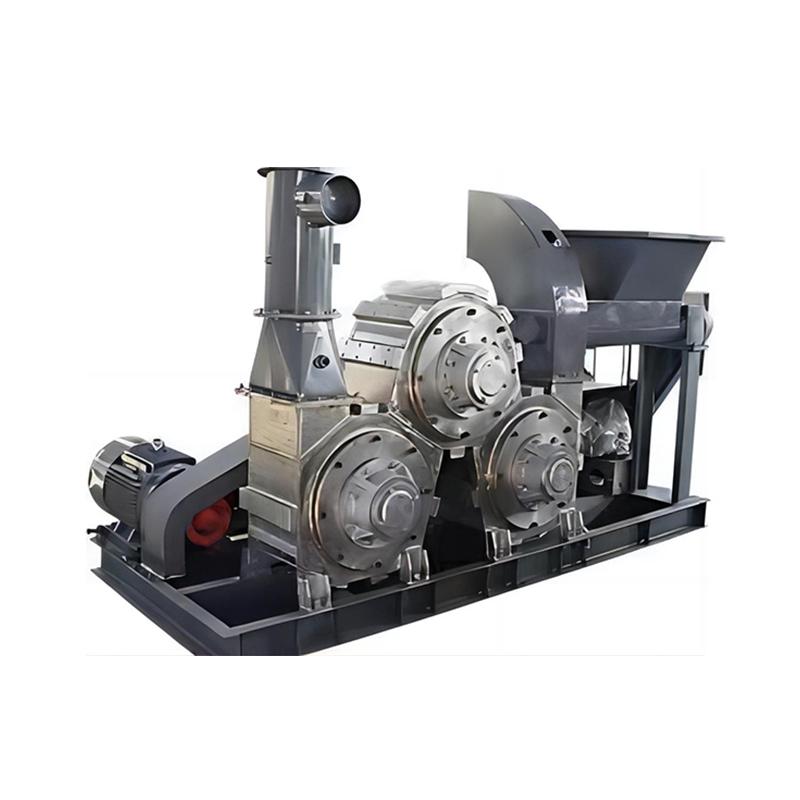
| Shear and compression | Roller press, ball mill | 10 to 100 microns | Coarse pre-milling, high tonnage | Broad PSD, low energy efficiency |
| Cutting | Knife mill | 100 to 1000 microns | Fibrous or elastic excipients | Poor fit for brittle drug crystals |
| Fluid energy | Fluidized bed jet mill, spiral jet mill | 1 to 10 microns | Heat-sensitive APIs, narrow PSD | High gas consumption and cost |
| Wet media milling | Bead mill, wet ball mill | 0.05 to 5 microns | Nanosuspensions, poorly soluble compounds | Media wear, downstream drying |
Milling Equipment Used at Pharmaceutical Scale
Equipment selection follows from the mechanism. In practice, three families cover most particle size reduction work on active pharmaceutical ingredients and excipients.
Fluid Energy (Jet) Milling
Jet mills grind by particle-on-particle collision inside a high-velocity gas stream, with no mechanical media and no screens. Because the grinding energy comes from gas expansion, the process is largely self-cooling, which suits heat-sensitive APIs. Fluidized bed jet mills combine grinding and internal classification in a single body, giving d50 values around 1 to 5 microns with a controlled top size, while spiral jet mills are simpler and cheaper but allow a wider spread. Gas consumption is both the main operating cost and the main scale-up variable.
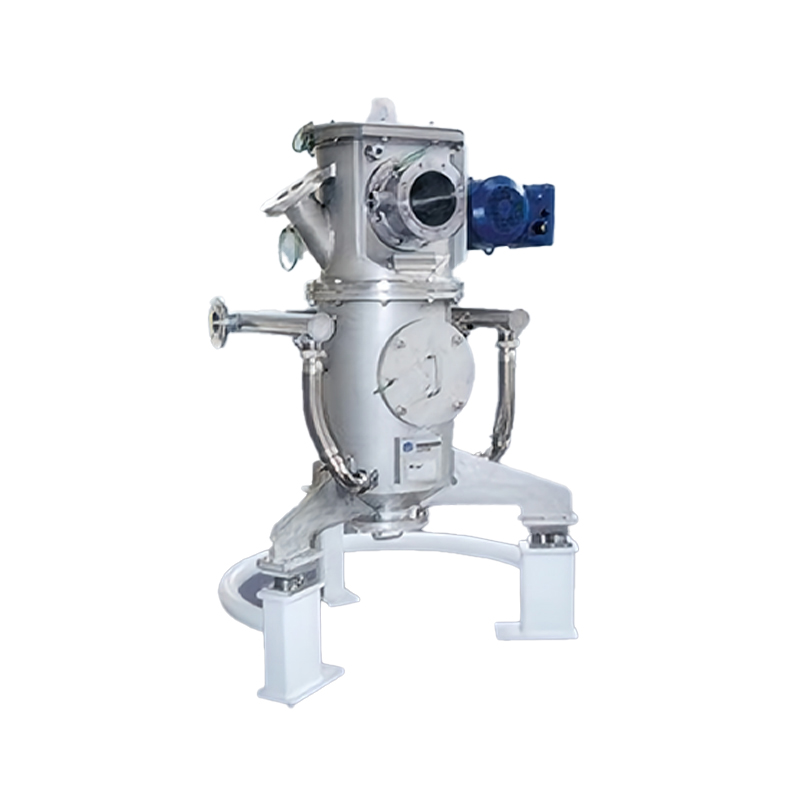 Fluidized Bed Jet Mill for Dry Ultrafine GrindingOffers media-free, low-temperature grinding with adjustable D50 from 1 to 45 μm, suitable for heat-sensitive, high-purity, and hard materials.View Product →
Mechanical Impact and Attrition Mills
Hammer mills and pin disc mills are the workhorses for coarse-to-medium reduction, typically 50 to 200 microns, and their screens set the top size mechanically. Vibrating mills and stirred media mills use attrition to reach finer sizes with a narrower distribution. Our article on the vibrating mill working principle explains how chamber geometry, media charge and amplitude interact to determine both fineness and throughput.
Wet and Media Milling
When the target falls below a few microns, wet bead milling becomes attractive: the liquid carrier suppresses dust, static and re-agglomeration, and bead mills routinely reach 0.1 to 1 micron. The trade-offs are a downstream drying step and media wear, which must be quantified against elemental impurity limits before the route is fixed.
Classification Is What Fixes the PSD
A mill only breaks particles; a classifier decides which ones leave. In a closed-circuit system the mill and the air classifier are sized together: coarse material is rejected and returned to the grinding zone, while fines report to the product filter. The cut point, usually expressed as a d50 or a d97, is set by rotor speed, air flow and internal geometry.
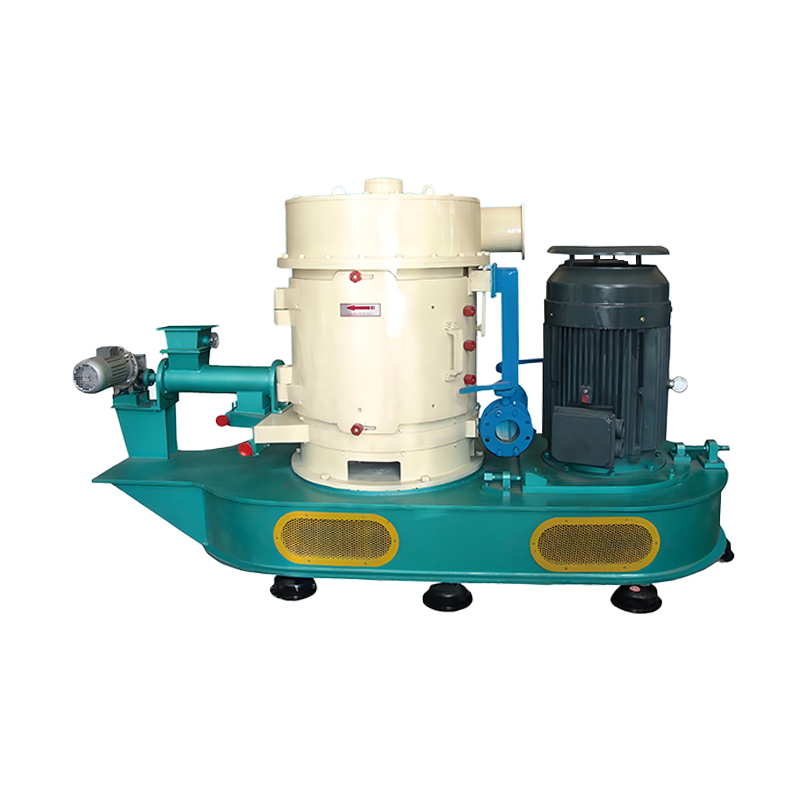
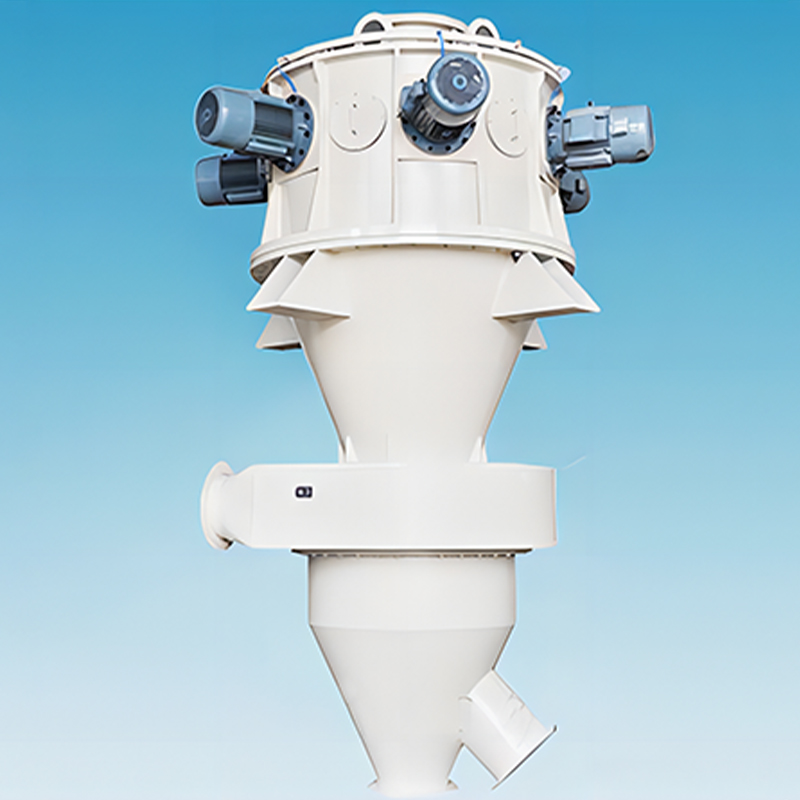 Air Classifier for Dry Micron-Sized Powder SeparationProvides variable-frequency rotor control and D50 1–45 μm classification, fitting closed-circuit systems with ball, vibrating, or Raymond mills.View Product →
Two numbers must be specified, not one. The top size controls the dissolution tail and the mouthfeel of the final dosage form; the fines fraction controls flow, dustiness and content uniformity. A sharp cut - a narrow ratio between d90 and d10 - is what separates a stable micronization line from one that needs constant rework.
Process Variables and Common Pitfalls
Most PSD failures trace back to a short list of variables. Control them and the process becomes reproducible batch after batch.
- Feed rate and residence time: overfeeding a jet mill shifts the PSD coarse and, on some APIs, raises amorphous content.
- Feed particle size: mills perform best within a defined feed window, so a variable pre-mill step produces a variable final PSD.
- Temperature and humidity: heat build-up can melt, dehydrate or recrystallise the API, while humid air agglomerates hygroscopic powders.
- Static charge: micronized powders can carry high charge, causing wall adhesion, filter blinding and yield losses that commonly reach 5 to 15 percent of a batch.
- Contamination: media, liner and screen wear introduce metals that must stay inside elemental impurity limits.
- Measurement method: laser diffraction, sieve analysis and microscopy return different numbers, so the specification must name the method and the dispersing conditions.
How to Specify a Particle Size Reduction System
A specification built in this order avoids expensive rework later in development:
- Define the target PSD from the dissolution method and the bioavailability assessment, not from a reference product.
- Characterise the API: brittleness, melting point, amorphous tendency, hygroscopicity and abrasive index.
- Choose the mechanism, then the equipment class - dry jet, dry mechanical or wet media.
- Size the classifier for the top size required, and confirm the fines fraction is acceptable for downstream processing.
- Run a design-of-experiments block on feed rate, grinding pressure or rotor speed, and classifier speed.
- Qualify the PSD method and lock the sampling protocol before the first engineering batch.
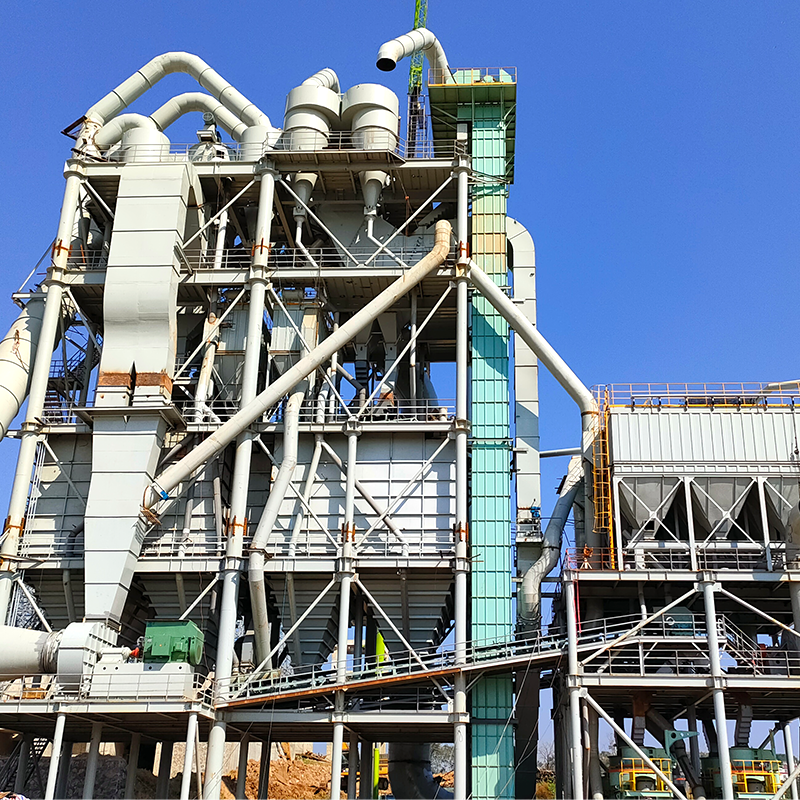
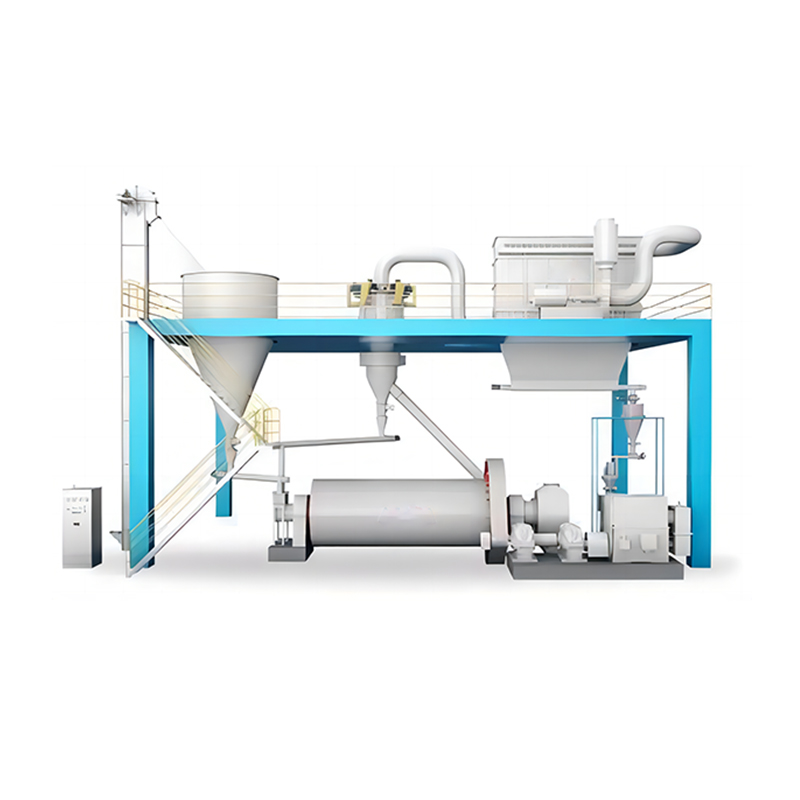 Ball Mill and Classifier Production Line for Ultrafine PowdersSupports 11–50 t/h customizable closed-circuit grinding with programmable control, multiple classifiers, and materials such as calcium carbonate, slag, barite, and kaolin.View Product →
Where a product calls for high-volume closed-circuit grinding rather than single-pass jet milling, a matched mill and classifier configuration holds the circulating load stable and keeps the target curve repeatable at production scale.
Where Powder-Processing Experience Pays Off
Jiangsu JND Environmental & Energy Technology Co., Ltd. has been building powder-processing and environmental equipment from its base in Yancheng, Jiangsu since 2002. Our range covers crushing, grinding, air classification, ultrafine powder preparation, drying, dust removal and flue gas treatment - the same unit operations that sit behind pharmaceutical particle size reduction, engineered at industrial scale. Development work is supported by a provincial technology research centre, long-term collaboration with universities including Southeast University and Tongji University, and ISO 9001, ISO 14001 and OHSAS 18001 certified management systems.
If you are specifying a milling and classification line, or troubleshooting a PSD that will not hold, our engineers can review your material data and target curve with you - send us your material data and target PSD and we will come back with a practical configuration.


 Email:ycjnd@163.com
 Telephone:+86-13770001111
 Phone:+86-515-88582588



