

 English
 中文简体
 русский
 Español
 عربى


Particle size definition: the measured linear dimension of an individual particle, usually expressed as an equivalent diameter because real particles are rarely perfect spheres. In a powder, slurry, dust, or granular material, particle size is not a single fixed number for the whole sample. It is a property defined by the measurement principle, the shape assumption, and the statistical parameter reported, such as D10, D50, or D90.
That is why two labs can follow good practice and still report different particle sizes for the same material. One may use sieve analysis, another laser diffraction, and a third image analysis. Each method interacts with the particle in a different way. A useful particle size definition therefore answers three questions: what is being measured, how the equivalent diameter is calculated, and which part of the distribution is being quoted.
Content
- 1 What Particle Size Actually Means
- 2 Why Particle Size Distribution Matters More Than a Single Number
- 3 How Particle Size Is Measured
- 4 Key Reporting Rules That Prevent Confusion
- 5 From Definition to Process Control: Milling, Classification, and Quality
- 6 Ultrafine Particle Size Definitions and Equipment Choices
- 7 Where Particle Size Definitions Are Used in Industry
- 8 Common Misunderstandings About Particle Size
- 9 A Practical Checklist for Defining Particle Size in a Project
- 10 How JND Supports Particle Size Control
What Particle Size Actually Means
For a perfect sphere, particle size is simply its diameter. For real particles, which may be angular, flaky, fibrous, porous, or agglomerated, particle size must be defined through an equivalent diameter. This is a calculated diameter that gives the same response as the real particle under a chosen measurement principle.
- Volume-equivalent diameter: the diameter of a sphere with the same volume as the particle.
- Surface-area-equivalent diameter: the diameter of a sphere with the same surface area.
- Sieve diameter: the width of the smallest square opening a particle can pass through.
- Hydrodynamic diameter: the diameter of a sphere with the same motion behavior in a fluid.
- Feret diameter: the distance between two parallel tangents on a projected particle image.
When a supplier states a particle size, ask whether it is volume-based or number-based. The same powder can show a very different D50 when a few large particles dominate volume while billions of fines dominate number.
Why Particle Size Distribution Matters More Than a Single Number
No industrial powder contains particles of only one size. A sample contains a range, and that range is described by a particle size distribution. The most common reporting metrics are D10, D50, D90, and span. D50 is the median, not the arithmetic average, and it says nothing by itself about the coarse or fine tails.
| Metric | Definition | Typical interpretation |
|---|---|---|
| D10 | 10% of particles are smaller than this size. | Fines content, dust behavior, flowability |
| D50 | 50% of particles are smaller than this size. | Central tendency of the powder |
| D90 | 90% of particles are smaller than this size. | Coarse tail, milling target, top size control |
| Span | (D90 - D10) / D50 | Width and uniformity of the distribution |
For example, two powders may both have a D50 of 12 micrometers. If one has a D90 of 25 micrometers and the other has a D90 of 55 micrometers, they will behave differently in reactivity, packing, strength, wear, and dust generation.
How Particle Size Is Measured
Particle size is not measured directly in most modern instruments. It is inferred from a physical signal, and that signal depends on the method. This is why the method statement is part of the definition.
- Sieve analysis: separates particles by aperture size and reports a mass-based size fraction.
- Laser diffraction: calculates size from the angular intensity of scattered light, usually as a volume distribution.
- Dynamic light scattering: derives hydrodynamic size from Brownian motion, mainly for sub-micron and nano materials.
- Dynamic image analysis: measures individual particle images and can report shape as well as size.
- Sedimentation: uses settling velocity and Stokes law to estimate size.
- Electrical sensing zone: counts particles by changes in electrical resistance as they pass through an aperture.
Results are comparable only when the method, dispersion, equivalent diameter, and distribution basis match. A D50 from sieve analysis should not be expected to equal a D50 from laser diffraction.
Key Reporting Rules That Prevent Confusion
Volume versus Number Distribution
A volume distribution gives more weight to large particles, while a number distribution gives more weight to small particles. For the same sample, the number-based D50 can be far smaller than the volume-based D50.
Wet versus Dry Dispersion
Dispersion changes the measured size. Dry dispersion may break weak agglomerates, while wet dispersion may swell or dissolve some materials. The dispersion medium and energy should always be reported.
Method Statement
A complete particle size definition should include the instrument principle, the equivalent diameter, the distribution type, the dispersion procedure, and any sample preparation step. Without these details, a number is difficult to reproduce.
From Definition to Process Control: Milling, Classification, and Quality
In production, particle size definition is not academic. It sets targets for mills, classifiers, screens, and dust collectors. If the target is a D90 below a certain limit, the circuit must remove coarse particles reliably. If the target is a narrow span, classification efficiency becomes as important as grinding energy.
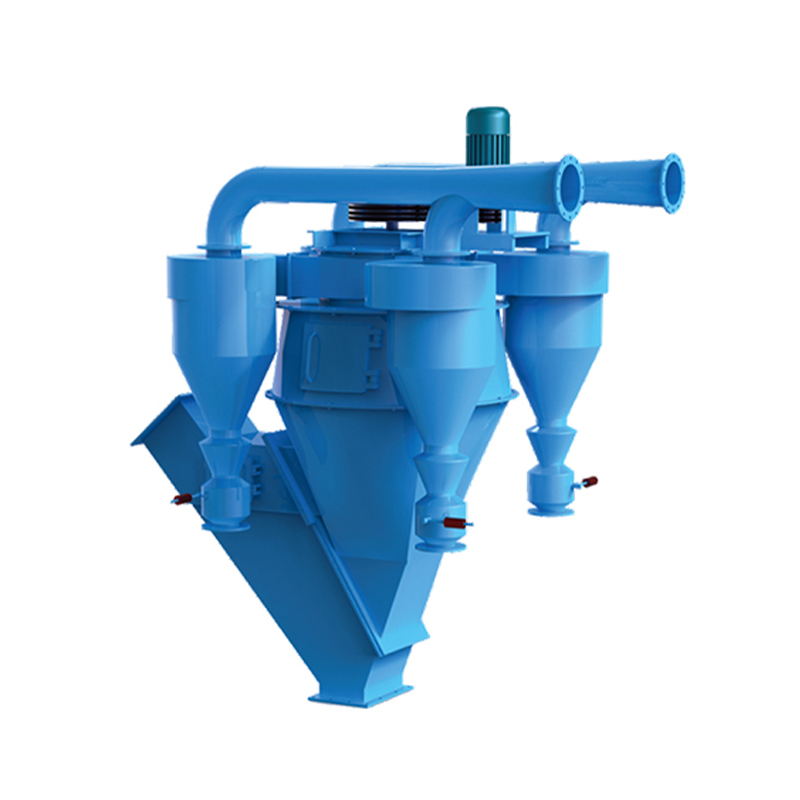
Jiangsu JND Environmental & Energy Technology Co., Ltd. has worked in powder grinding and classification equipment since 2002, serving industries such as power, chemical, cement, and steel. A dynamic powder classifier is often used when the process needs adjustable cut size and stable fine product control.
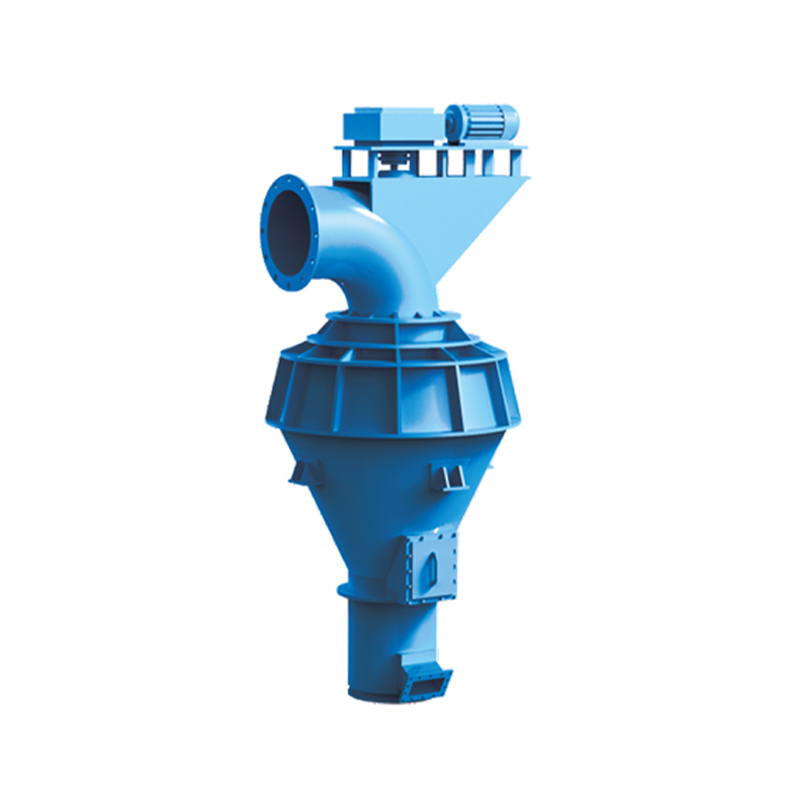 MX Series Dynamic Powder Classifier for Coal MillsAdjustable cut size and stable fine product control make this dynamic classifier relevant where grinding circuits need flexible separation and higher system output.View Product →
Ultrafine Particle Size Definitions and Equipment Choices
Below roughly 10 micrometers, particle size definitions become more sensitive to agglomeration, surface forces, and measurement method. Ultrafine products may require both a tight top size and a controlled median. In these cases, air classification and jet milling circuits are common because they can combine size reduction with precise separation.
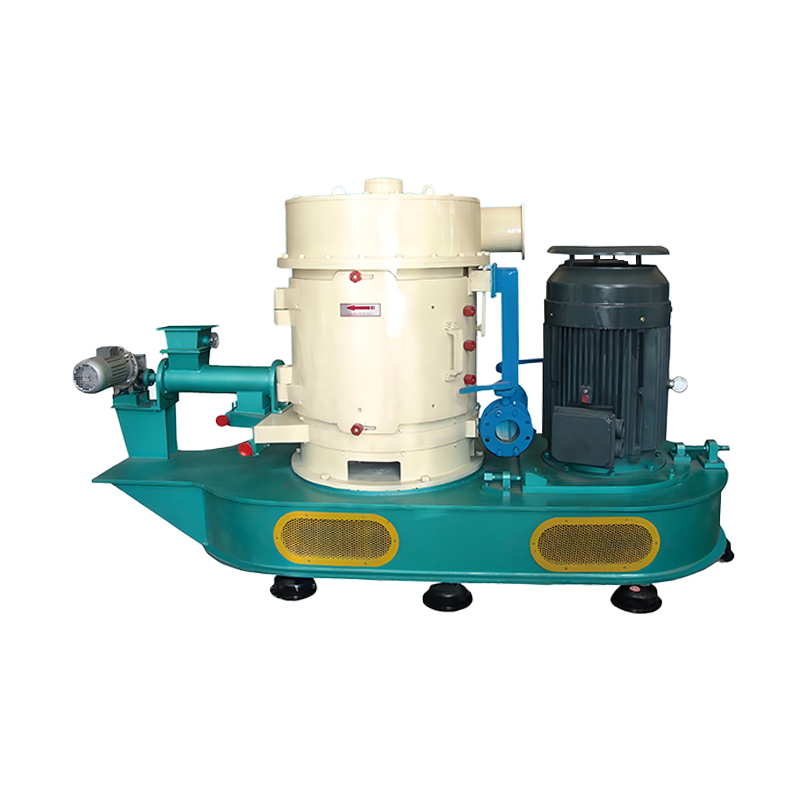
For ultrafine powders, the JSP ultrafine powder classifier is designed to support fine cut points and consistent product grading. The correct choice depends on the target D50, D90, feed properties, and required throughput.
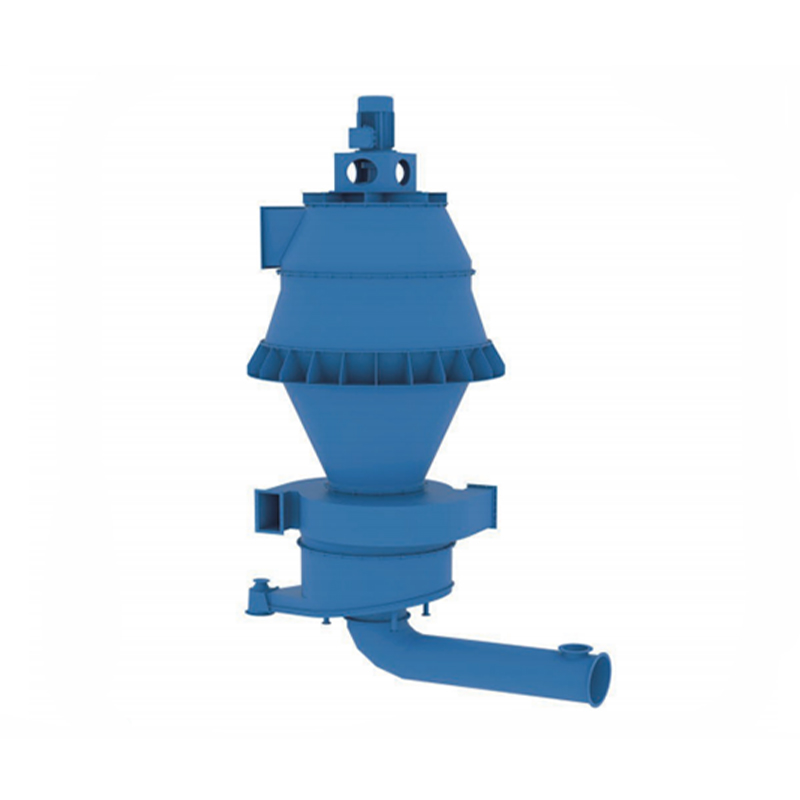 JSP Ultrafine Powder Classifier for Precision GradingDual-drive, dual-cage classification supports fine cut points and consistent grading for ultrafine powders in cement and industrial grinding circuits.View Product →
Where Particle Size Definitions Are Used in Industry
- Cement and mineral processing: controls reactivity, strength development, and grinding efficiency.
- Power generation: affects coal milling, combustion, and fly ash handling.
- Chemical and powder coating: influences flow, curing, gloss, and dispersion stability.
- Steel and metallurgy: relates to raw material preparation, dust control, and additive performance.
- Sand and aggregate: determines grading, packing, and downstream product quality.
In each case, the definition must connect to the process goal. A specification that only says "fine powder" is not a particle size definition.
Common Misunderstandings About Particle Size
- Particle size is not dispersion. Dispersion describes how well particles are separated, not how large they are.
- D50 is not an average diameter. It is the median of a chosen distribution.
- Smaller is not always better. Very fine powders can increase dust, energy cost, and handling difficulty.
- One method is not universal. Sieving, laser diffraction, and imaging answer different physical questions.
- Distribution width matters. A narrow span often predicts more stable behavior than a low D50 alone.
A Practical Checklist for Defining Particle Size in a Project
- State the purpose: quality control, equipment design, sales specification, or research.
- Select the equivalent diameter and measurement method that match the process behavior.
- Specify the distribution metrics, such as D10, D50, D90, and span.
- Agree on dispersion, sample preparation, and reporting basis.
- Verify the definition against actual mill, classifier, or dust collector performance.
This checklist prevents a common failure: a precise number that does not describe the material in the real process.
How JND Supports Particle Size Control
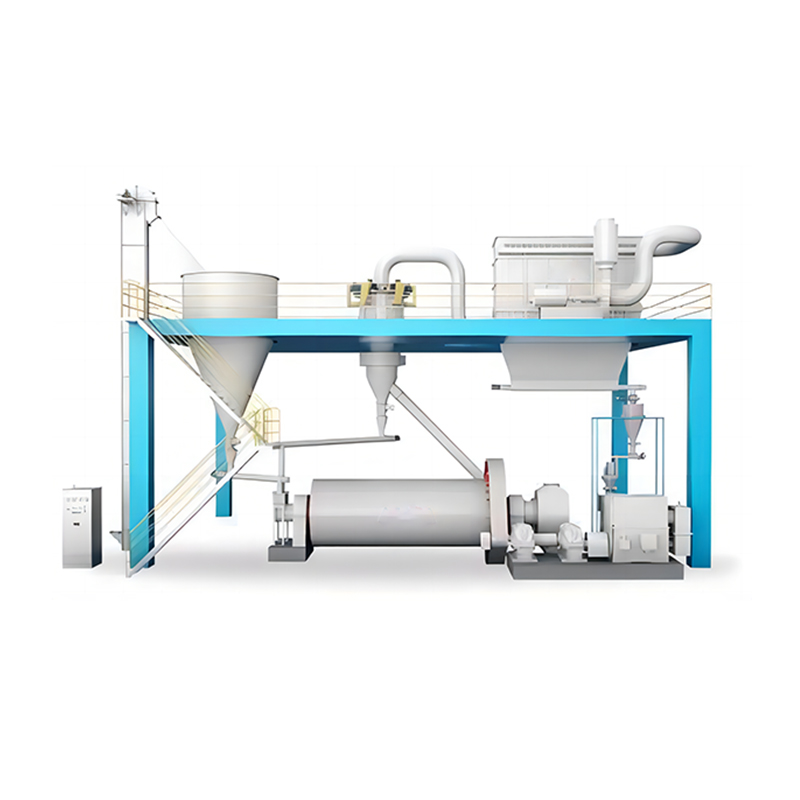
JND's product scope covers classification, ultrafine powder preparation, pulverization, drying, dust removal, and flue gas desulfurization and denitrification equipment. The company operates under ISO 9001, ISO 14001, and OHSAS 18001 management systems and has been recognized as a national high-tech enterprise. That engineering background helps teams move from a particle size definition to a practical equipment selection.
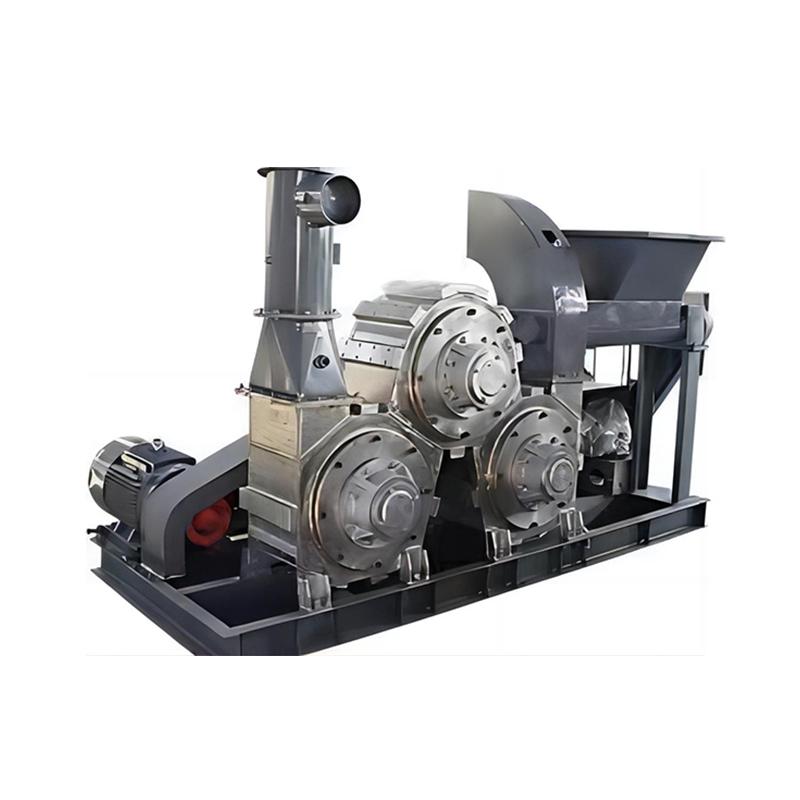
For comminution and fine grinding, a vibrating mill can be part of a circuit where size reduction and downstream classification must work together. You can review the vibrating mill working principle for a closer look at how this equipment behaves in industrial use.
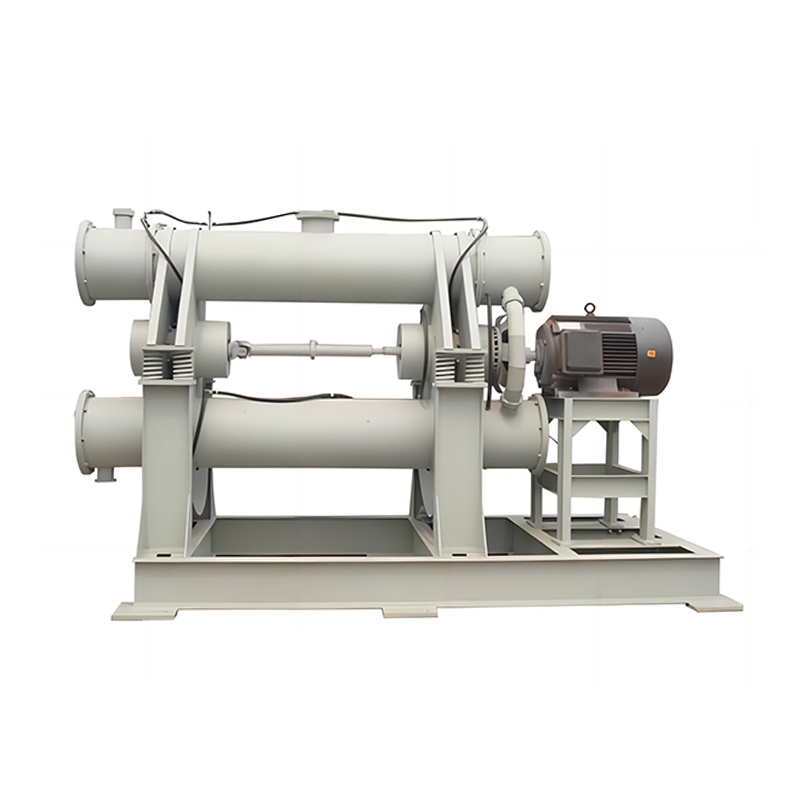 Vibrating Mill for Ultrafine Grinding and ProcessingAdjustable vibration parameters and media allow ultrafine grinding, mixing, and surface modification across hard materials in sealed, program-controlled operation.View Product →
A reliable particle size definition is a measurement contract: it states the equivalent diameter, the distribution basis, the method, and the intended process meaning. When those details are clear, teams can compare powders, set specifications, and select milling or classification equipment with confidence.
If you are defining a particle size target for a powder, cement, chemical, or environmental project, contact our team to discuss the material, target distribution, and equipment route.

 Email:ycjnd@163.com
 Telephone:+86-13770001111
 Phone:+86-515-88582588



