Wholesale Dual-rotor powder classifier
Home / Equipment / Classification Equipment / Dual-rotor powder classifier
Dual-rotor powder classifier
  • Dual-rotor powder classifier

Dual-rotor powder classifier

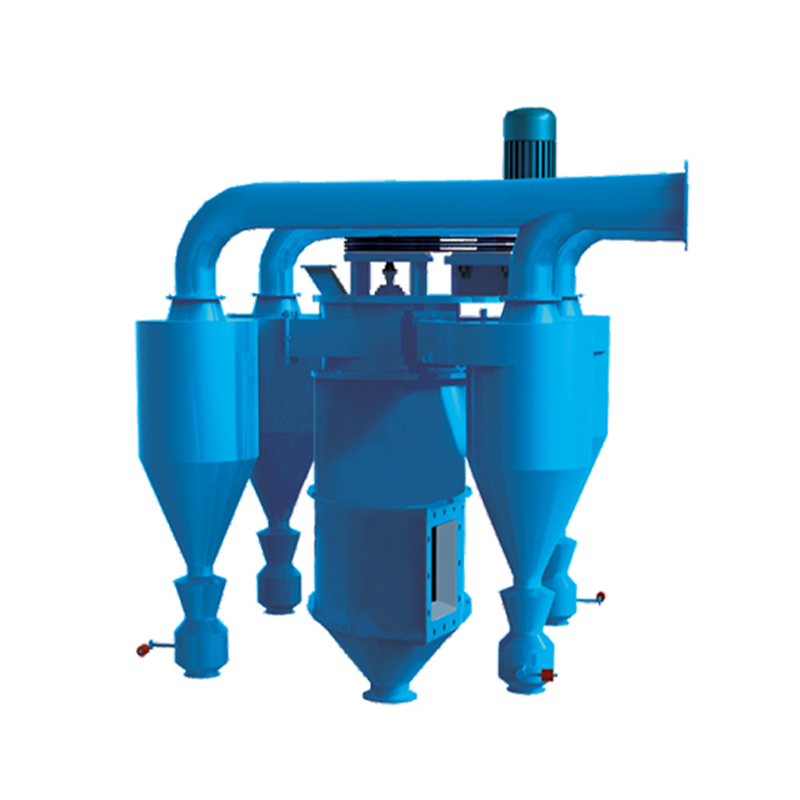
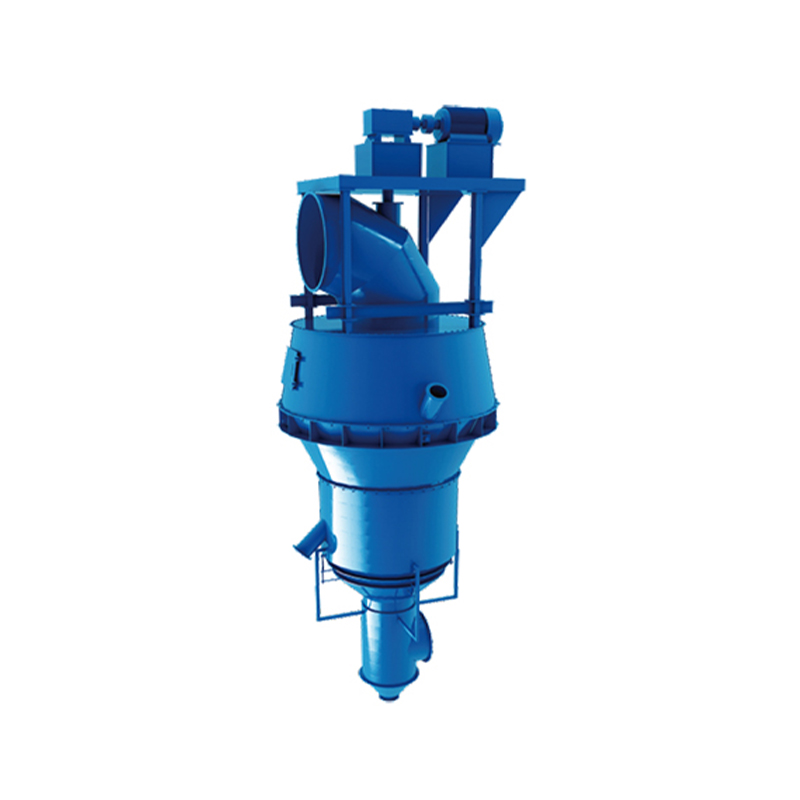
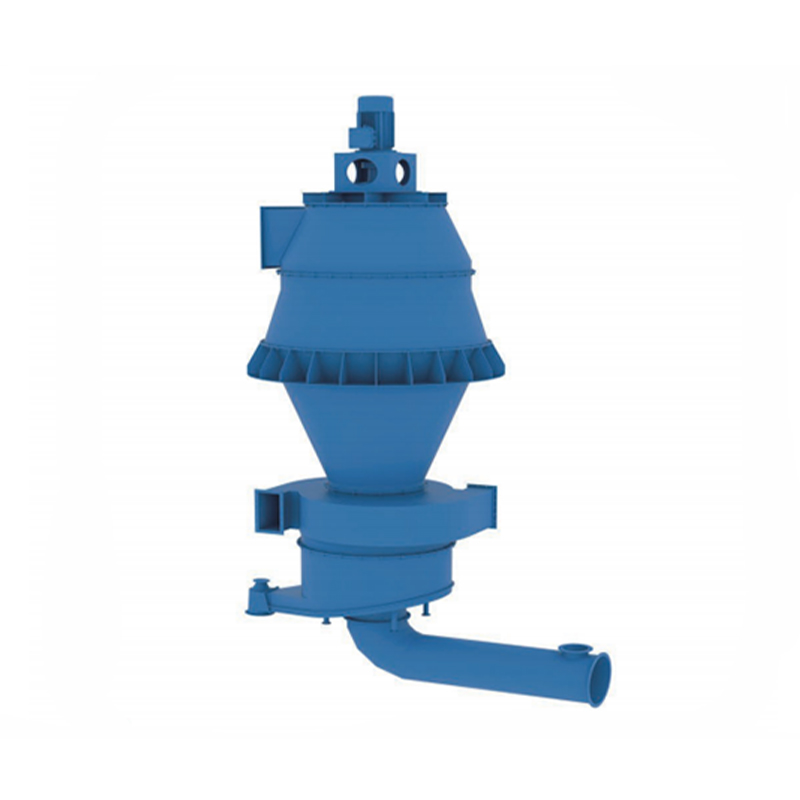
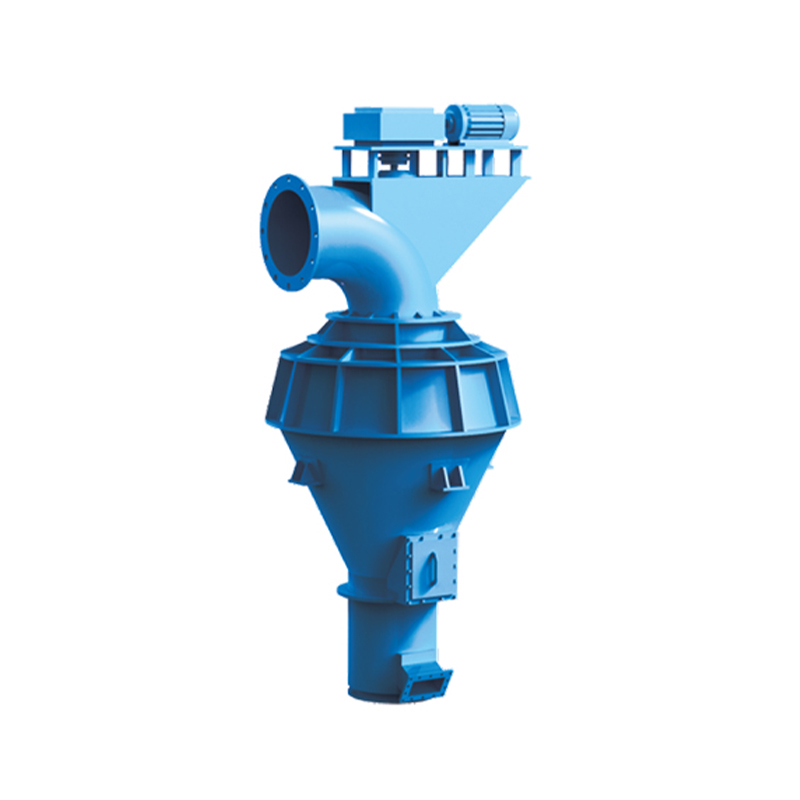
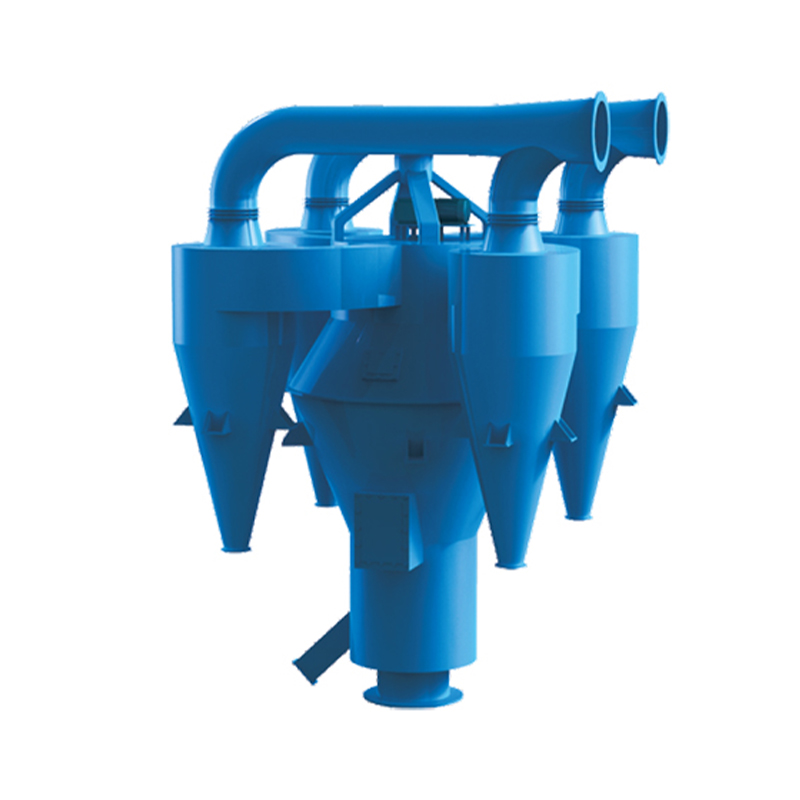
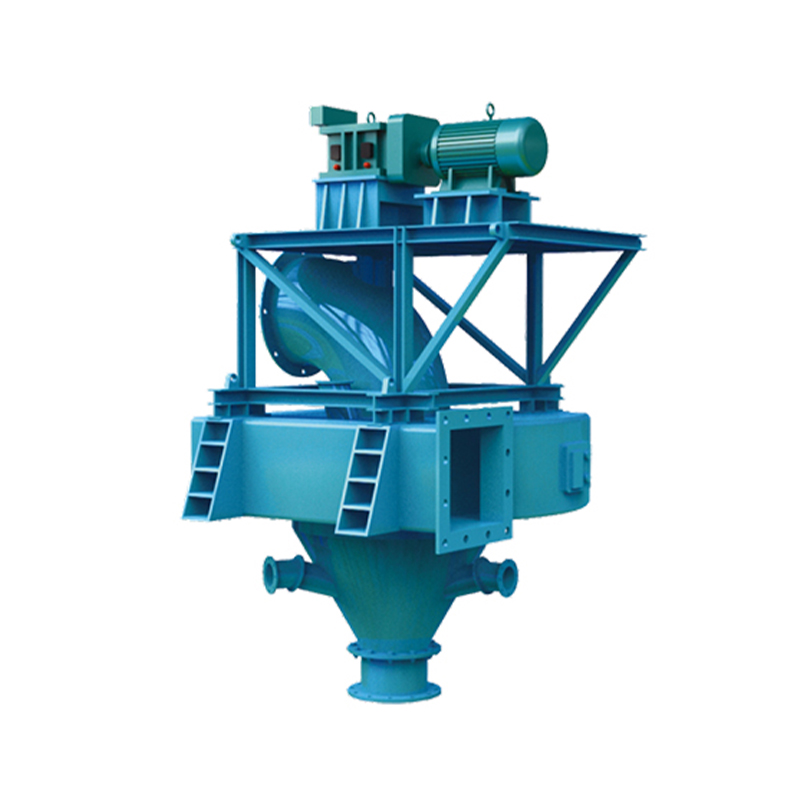
Our company independently developed a new type of powder-making equipment, the High-Efficiency Anti-Condensation Twin-Rotor Classifier, by applying planar eddy current theory to a cyclone-type classifier. It effectively resists condensation during operation, boasting a wide range of applications, high separation efficiency, convenient and flexible fineness adjustment, and stable and reliable performance.

[Feed Particle Size]: ≤5mm

[Production Capacity]: 20-400t/h

[Applications]: Cement grinding, sand and gravel yards, mining, coal mining, concrete mixing plants, dry mortar, quartz sand, etc.

[Applicable Materials]: River pebbles, granite, basalt, iron ore, limestone, quartz stone, diabase, construction waste, iron ore, gold ore, etc.

send inquiry
Product AdvantagesWorking PrincipleTechnical Specifications

Product Advantages

In cement production, circular flow grinding systems are now widely used to improve grinding system efficiency and reduce product energy consumption. As a crucial component of this system, the stable performance of the classifier directly impacts system efficiency. Therefore, the development of classifiers has long been a focus of research institutes and industrial and mining enterprises.

The JND series high-efficiency, anti-condensation, combined twin-rotor classifier is a new type of classifier developed independently by technicians at Jiangsu Jinengda Building Materials Equipment Co., Ltd., combining international classifier technology with the optimal application of planar eddy current theory to cyclone-type classifiers. It has proven to achieve a classifier efficiency of 85-90%, offering convenient and flexible fineness adjustment and stable and reliable performance.

Compared to traditional classifiers, the JND series high-efficiency, anti-condensation, combined twin-rotor classifier has the following unique advantages:

  1. It utilizes a removable, modular propeller-type scattering disc. This not only spreads the material but also generates an updraft, causing the material particles on the disc to boil and disperse, thereby enhancing the classification and dispersion of the material particles.
  1. It features an advanced classification principle. Combining multiple powder separation mechanisms, the machine utilizes the balance between opposing centrifugal forces and the centripetal suction of the airflow. The material passes through the separation zone with distinct separation interfaces, resulting in high classification accuracy.
  2. The tandem lower cage rotor lifts and disperses the coarse powder separated in the upper separation chamber, further separating qualified fine powder while ensuring uniform vortex airflow within the machine.
  3. The classifier's main shaft features stepless high speed, enabling convenient, sensitive, and reliable fineness adjustment over a wide adjustment range.
  4. The redesigned separation zone has been optimized to increase its spatial area and improve separation efficiency.
  5. A low-resistance cyclone dust collector is used, resulting in low resistance and high dust collection efficiency.
  6. Various anti-condensation devices, including an elastic sweeper, have been optimized within the machine for excellent anti-condensation effectiveness.
  7. All vulnerable areas are protected by new multi-stage linings, effectively extending the life of the main unit.
  8. The rotation system utilizes a dry oil station system, successfully addressing the issue of bearing wear. 10. The use of a hyperstatic structure ensures virtually vibration-free operation of the entire machine; the use of a dust-proof and vibration-reducing fan reduces system vibration.
  9. The coarse and fine powder pipes utilize double interlocking air valves, significantly reducing air leakage and overcoming the high dust generation issue of previous powder concentrators.

Working Principle

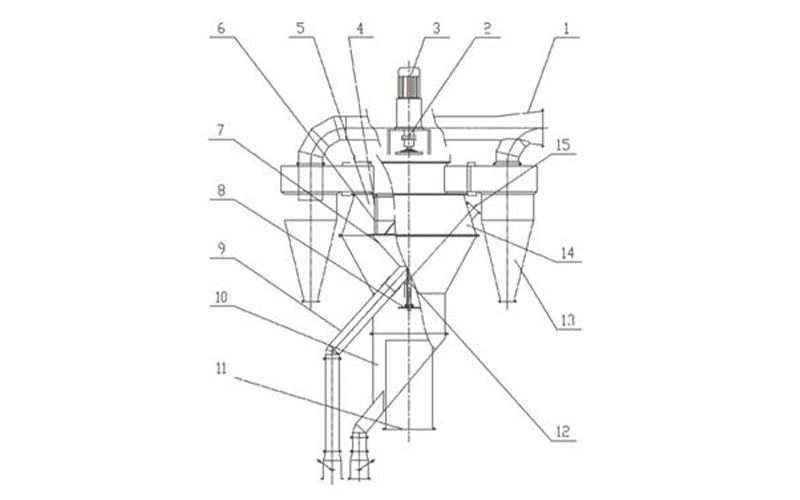
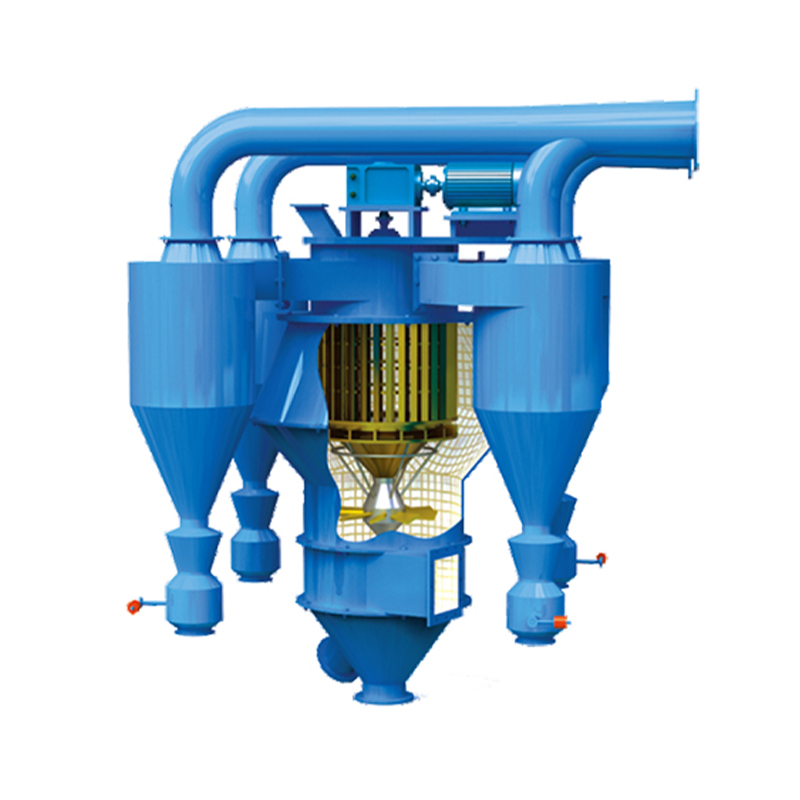
  1. Exhaust material enters the classifier's inner casing from the upper hopper and falls onto the integrated propeller-type scattering disc, which is integrated with the rotor. Driven by the disc's high-speed rotation, it is dispersed in all directions. Simultaneously, the updraft generated by the propeller blades lifts the material upward, creating a boiling point on the disc's propeller blades. Finer particles float upward, becoming suspended and dispersed, while coarser or heavier materials are dispersed by the disc's blades and fall along the cylinder wall, completing the separation process.
  2. Below the scattering disc is a lower cage rotor 10. Rotating with the main shaft, the lower cage rotor creates a vortex that re-disperses the coarse and heavy materials that fall along the cylinder wall. The finer particles are lifted upward and returned to the circulating air for further classification. The coarse particles then pass through a drip mechanism and are discharged from the inner cone.
  3. Above the scattering disc is a cage rotor 6. Within the powder selection chamber, the airflow near the surface of the upper cage rotor's classifying ring and the material dispersed within it rotate at high speed, driven by the ring. This high-speed vortex forms a uniform, intense vortex around the ring. Within this region, the relationship between centrifugal force and suction force remains constant at all locations. The centrifugal force acting on the material in the airflow can be adjusted by adjusting the speed of motor 2's main shaft 3. This force increases as the speed increases. If the air volume remains constant, the cut particle size decreases, resulting in a finer product. Reducing the speed results in a coarser product.
  4. After classification by the upper cage rotor, the fine particles are transported with the circulating air to the various external cyclone dust collectors. The newly designed cyclone dust collectors feature air guides at the air inlet, a reflective screen on the inner cone, and a speed reducer at the lower end, significantly reducing the fluid resistance within the cyclone dust collector. Driven by the air guides, the circulating air enters the cyclone collectors at a high velocity. The wind speed suddenly decreases in the expanded part of the snail horn, which accelerates the sedimentation of particles and also improves the dust collection efficiency of the cyclone dust collector.

Technical Specifications

Name Output per Unit per Hour Product Fineness (80μm Sieve Residue) Spindle Motor Fan Spindle Rotation Speed
Raw Materials (t/h) Cement (t/h) Raw Materials Cement Model Rotation Speed (r/min) Power (Kw) Model Air Volume (m³/h) Air Pressure (kpa) Rotation Speed (r/min) Motor Model Power (kw) Rotation Speed (r/min)
JND500 19 - 28 16 - 22 8-10 YCTL200 - 4B 125 - 1258 7.5 5CF - 12NMC 30900 2.43 1600 Y200L1 - 2 30 190 - 380
JND600 28 - 35 20 - 26 YCTL225 - 4A 132 - 1320 11 11CF - 12NMC 37960 2.34 1200 Y225S - 4 37 150 - 350
JND700 33 - 46 26 - 35 YCTL225 - 4B 112 - 1120 15 15CF - 12NMC 50520 2.84 1000 Y250M - 4 55 150 - 350
JND800 52 - 65 43 - 54 YCTL250 - 4A 132 - 1320 18.5 18.5CF - 12NMC 71838 2.2 1000 Y280S - 4 75 150 - 350
JND900 70 - 86 50 - 68 YCTL250 - 4B 132 - 1320 22 22CF - 12NMC 86006 2.21 720 Y355M - 6 90 150 - 350
JND1000 110 - 138 85 - 105 YCTL315 - 4A 440 - 1340 37 37CF - 12NMC 119132 2.26 800 Y355M - 8 132 140 - 350
JND1100 140 - 165 115 - 135 YCTL315 - 4A 440 - 1340 55 55CF - 12NMC 168000 2.7 960 Y355M - 6 160 100 - 300
JND1200 215 - 240 160 - 180 YCTL315 - 4B 440 - 1340 75 75CF - 12NMC 192000 2.7 960 Y355M - 6 200 100 - 300
Message Feedback
Jiangsu JND Environmental & Energy Technology Co., Ltd.