Wholesale JTD intelligent three-drive powder classifier
Home / Equipment / Classification Equipment / JTD intelligent three-drive powder classifier
JTD intelligent three-drive powder classifier
  • JTD intelligent three-drive powder classifier

JTD intelligent three-drive powder classifier

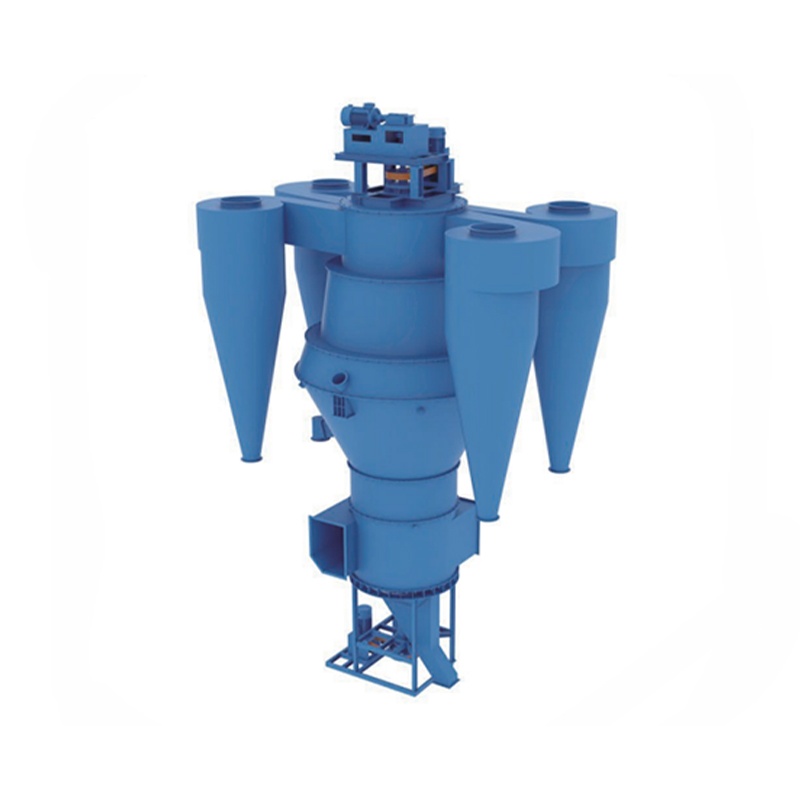
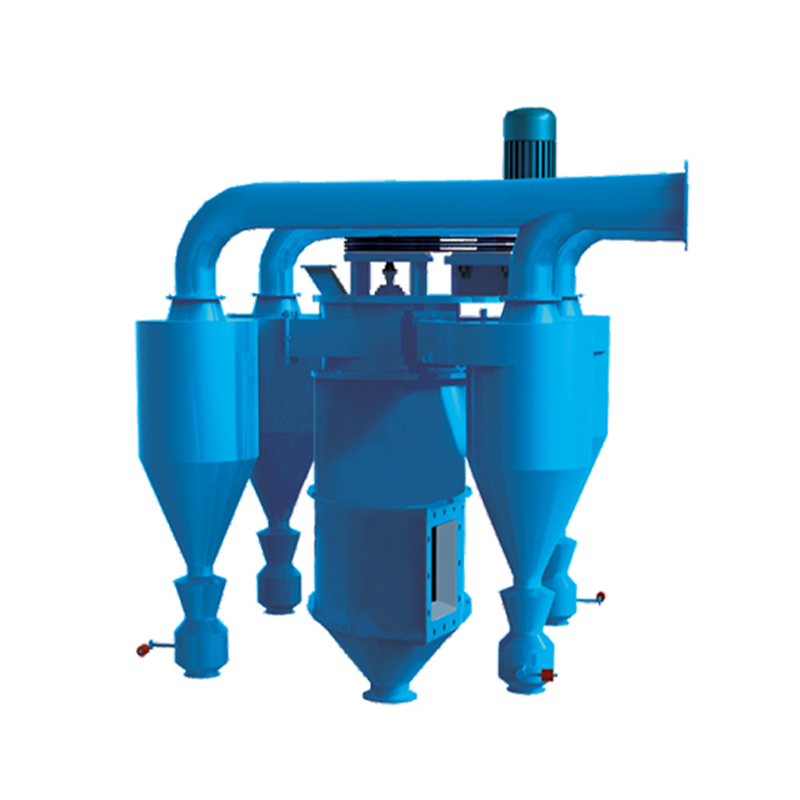
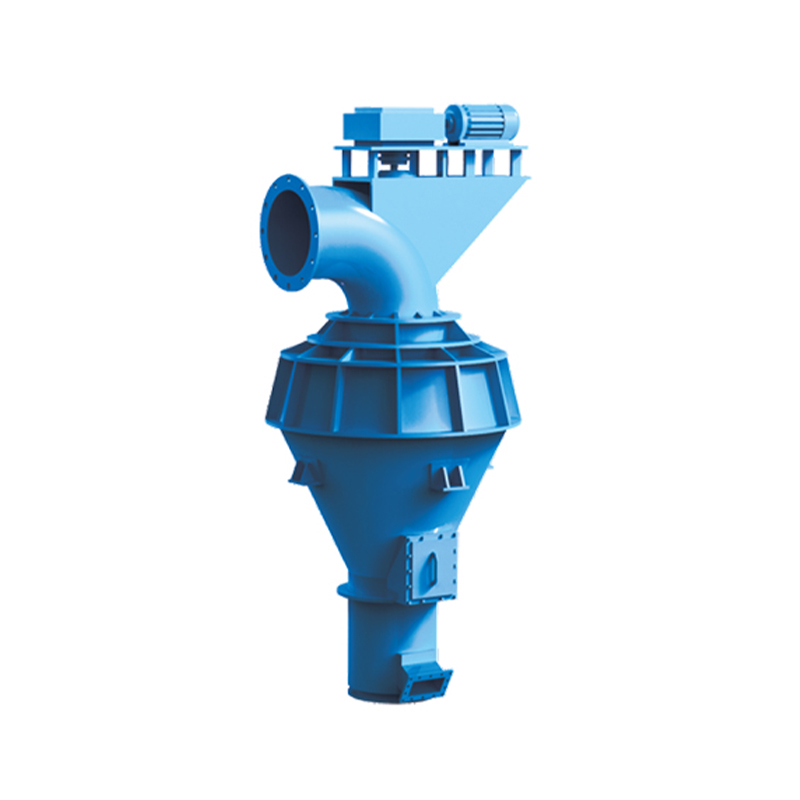
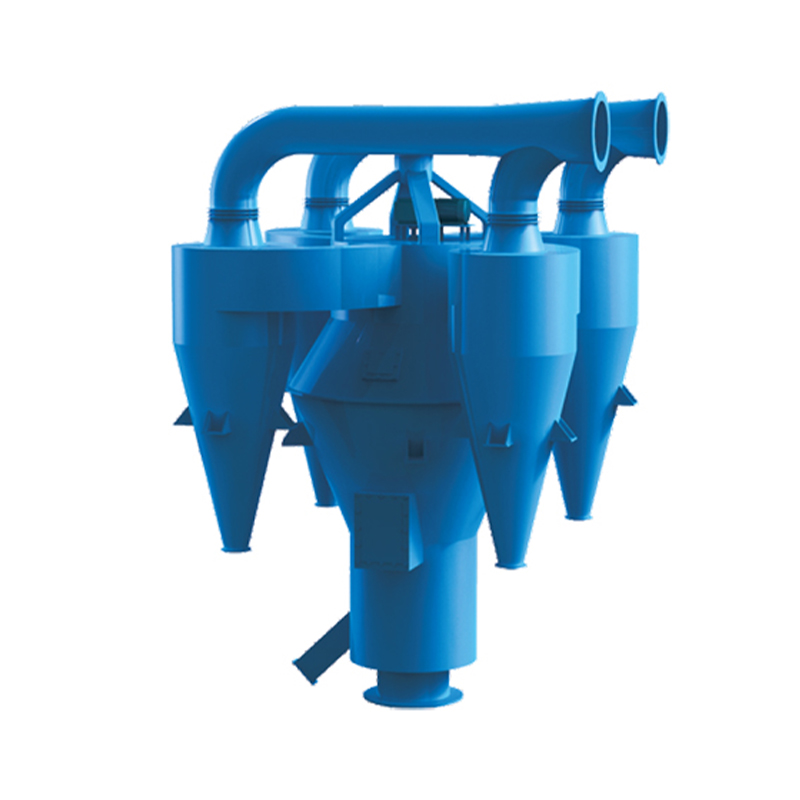
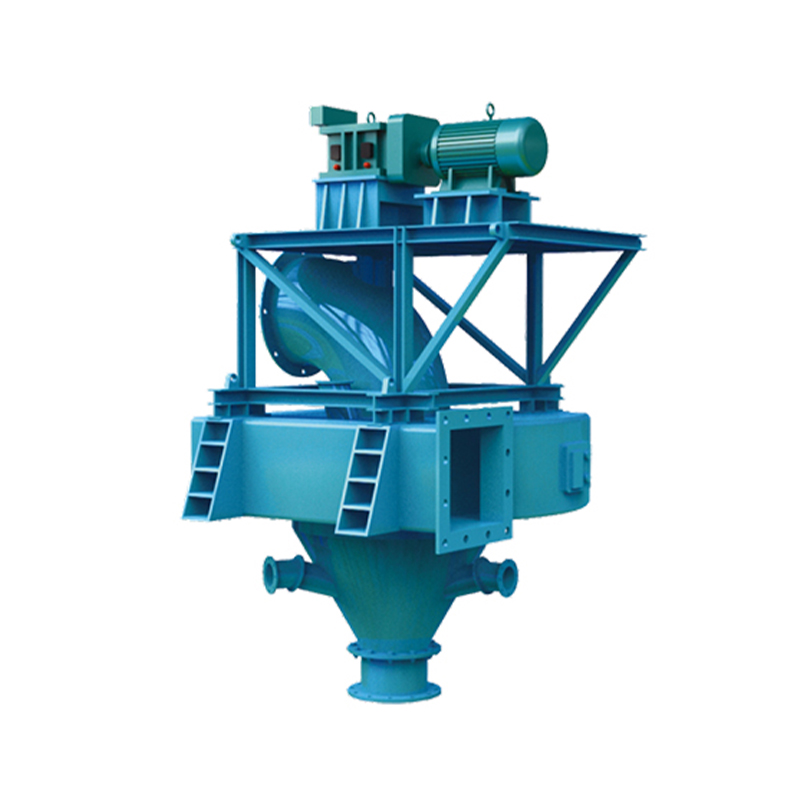
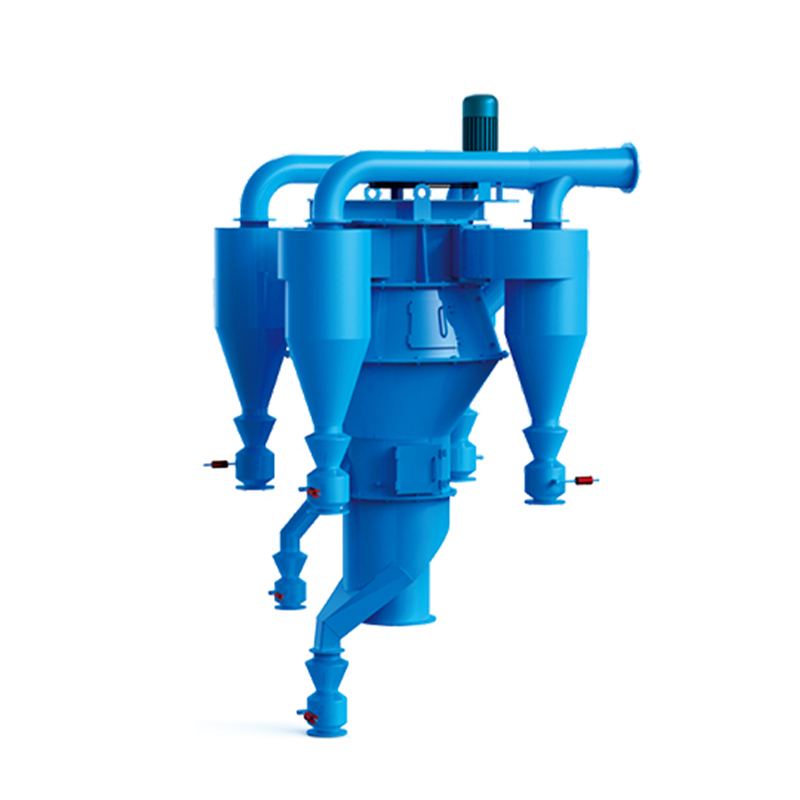
The three-drive powder classifier can separate the material into four categories: coarse particles (d>150um), coarse powder (150um<d>45um), medium powder (45um<d>20um) and fine powder (d<20um>). As a pre-grinding and grading device for cement roller presses, the medium powder can be arbitrarily allocated to the cement product and/or the ball mill. The cement grading can also be optimized by adjusting the fine powder classification particle size.

send inquiry
Product AdvantagesWorking PrincipleTechnical Specifications

Product Advantages

    1. The three-drive powder classifier can separate materials into four categories: coarse particles (d > 150 μm), coarse powder (150 μm < d > 45 μm), medium powder (45 μm < d > 20 μm), and fine powder (d < 20 μm). As a pre-grinding and grading device for cement roller presses, the medium powder can be freely adjusted to feed the cement product and/or the ball mill. Cement grading can also be optimized by adjusting the fine powder grade.
    2. Material particles are sorted from coarse to fine, gradually reducing feed concentration and eliminating particle interference. The primary sorting process pre-separates coarse particles from the mixed powder. This eliminates interference from coarse particles in the secondary separation process, separates coarse powder in the secondary separation process, and eliminates interference from coarse powder in the tertiary separation process. The gradual reduction of feed rate and elimination of particle interference significantly reduce the required air volume for separation, resulting in significant energy savings.
    3. The internal flow field was simulated using the RNG (t-e) model, first-order upwind scheme, and SIMPLEC pressure-velocity coupling. Combined with the operating conditions of the vortex air classifier, the mass and volume loading rates of the particles within the classifier were calculated. A gas-solid bidirectional coupling (DPM) discrete phase model was determined. The stochastic model was solved using the Monte Carlo method, resulting in partial classification efficiency curves that more closely resemble those of the ideal classification, creating excellent conditions for accurate separation.
    4. Compact Structure: A set of propeller-spreading discs replaces the V-type separator, reducing equipment and construction costs for the bulky V-type separator. The combination of dual-drive, dual-cage classification equipment and a powerfully dispersed atomizer shortens the feed process and reduces system resistance. 5. Energy saving and environmental protection: The powder selection system adopts an internal circulation process with low installed power, low noise, and no dust emission, providing an effective way for cement companies to meet environmental protection standards.

    Working Principle

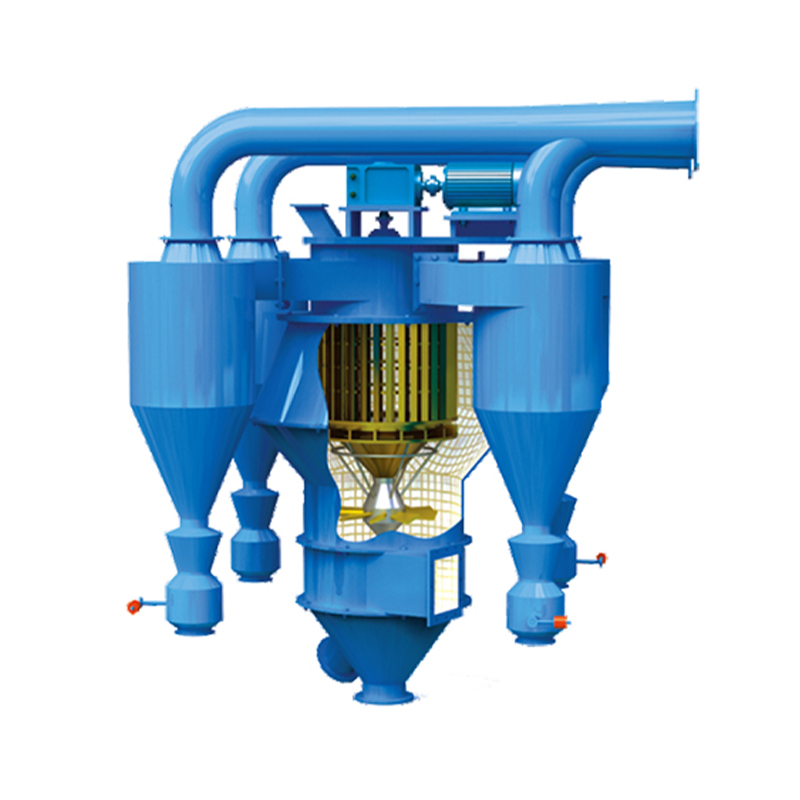
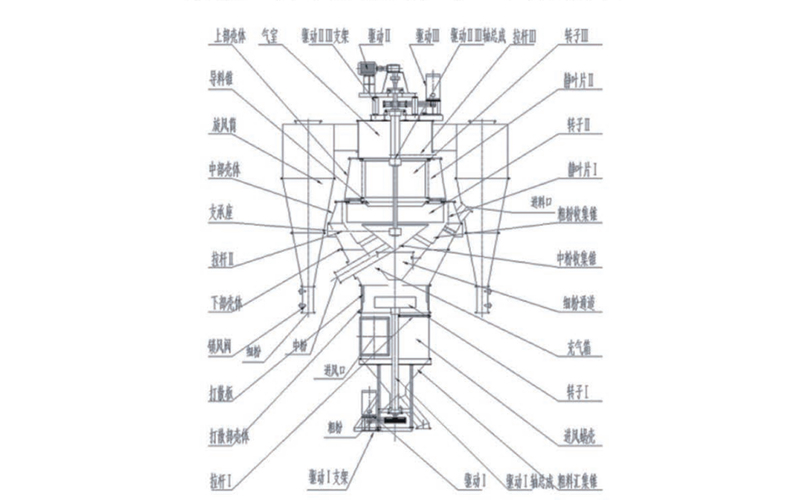
    This machine consists of three classification units: Unit I is the classifying unit, consisting of drive I, drive I shaft assembly, tie rod support I, feed pipe, coarse material collecting cone, air inlet volute, rotor I, and a classifying plate. Unit II is the medium-coarse powder classifying unit, consisting of drive II, drive II transmission components, stator blades I, rotor II, coarse powder collecting cone, lower housing, middle housing, tie rod support m, medium powder collecting cone, aeration box, air chamber, material guide cone, and cyclone. The three classification units are combined into a lubrication system, with bearings lubricated with grease and sealed with rubber-framed oil and air seals.

    Some of the housings are equipped with air seals and have inspection doors. Porcelain tiles are attached to the air inlet and elbow outlet of the housing. The feed pipe, stator blades, and other components are welded with wear-resistant material. The hopper is fitted with a wear-resistant lining to protect against wear. The upper portion of the air chamber supports the weight of the motor, reducer, and support connected to the classifier's main shaft. The rotor is secured to the main shaft with a key.

    Material from a process press or vertical mill is fed into the classifier's inlet. The rotating propeller scattering disc throws the material in a dispersed state toward the fixed curved receiving anvil (disintegration plate). Air enters the volute tangentially through the air inlet, where the material is dispersed by the scattering disc and anvil, undergoing primary classification within the rotating airflow.

    After primary classification, particles larger than 0.15 mm enter the coarse material collection cone. Particles smaller than 0.15 mm are carried upward by the airflow to the classification zone between stator blades I and the rotor opening. There, the centrifugal force of the rotating airflow and the centripetal drag force of the airflow lead to secondary classification.

    After secondary classification, particles larger than 0.045 mm fall into the coarse powder collection cone. Particles smaller than 0.045 mm are carried upward by the airflow to the classification zone between stator blades II and rotor m for further tertiary classification.

    After three rounds of sorting, particles larger than 0.02mm fall into the medium powder collection cone. Particles smaller than 0.02mm are transported by the airflow through the center of the rotor and discharged through the air box and ducts to the dust collector for collection.

    This machine operates under negative pressure. The sorting air can be dust-laden air, outside air, or a mixture of the two. Primary and secondary gases enter the classifier tangentially through their respective air inlets.

    Technical Specifications

    1. The feed concentration decreases step by step during sorting, eliminating particle interference. This results in high classification accuracy and a separation efficiency exceeding 80%.
    2. It boasts a high dust loading capacity per unit air volume. Its advanced and rational structure allows for wide variations in separation air volume, output, and feed rate without affecting separation efficiency, resulting in highly stable classification performance.
    3. The equipment offers low resistance. By integrating multiple separation principles and employing aerodynamic analysis to optimize the entire flow field, the system achieves significant energy savings throughout the grinding circuit.
    4. The system control is simple, sensitive, and reliable. Adjusting the rotor speed adjusts the operating state of the roller mill, the feed rate to the ball mill, and the fineness and yield of the finished product. This eliminates the traditional practice of adjusting the separation machine through fan air volume adjustments due to the limited rotor adjustment range in conventional grinding systems. The system utilizes stepless speed regulation, making adjustment convenient and reliable.
    5. The structural design is advanced, applicable, and reliable. Highly abrasive parts of the classifier, such as the cyclone, snail horn, air guide vanes, and rotor, are made of wear-resistant materials or treated with anti-wear technology, resulting in extremely low wear rates. The classifier's interior is lined with wear-resistant steel plates, effectively extending its service life. The spindle's lower bearing seal utilizes a novel design, effectively eliminating the two major issues of dust ingress and lubricant leakage, thereby significantly extending the lower bearing's service life.
    Model Handling Air Volume (m³/h) Rotating Speed Range (r/min) Motor Power (KW) Maximum Throughput (t/h) Output (t/h)
    Upper rotor cage Lower rotor cage Spreading pan Upper rotor cage Lower rotor cage Spreading pan Return amount Grinding amount Finished product
    JTD - 2500 150000 120 - 240 80 - 160 - 37 18.5 22 450 310 - 375 75 - 140 5 - 45
    JTD - 3000 180000 110 - 220 80 - 160 - 45 22 22 540 370 - 450 90 - 170 5 - 55
    JTD - 3500 210000 100 - 200 70 - 140 - 55 22 22 630 430 - 525 105 - 200 10 - 65
    JTD - 4000 240000 90 - 180 70 - 140 - 75 30 37 720 495 - 600 120 - 225 15 - 80
    JTD - 4500 270000 90 - 180 60 - 120 - 90 37 37 810 560 - 675 135 - 250 20 - 90
    JTD - 5000 300000 75 - 170 60 - 120 - 110 45 37 900 650 - 750 150 - 250 20 - 100

    Message Feedback
    Jiangsu JND Environmental & Energy Technology Co., Ltd.
    Jiangsu JND Environmental & Energy Technology Co., Ltd.