

 English
 中文简体
 русский
 Español
 عربى


Powder coating is a dry finishing process: finely ground, resin-based powder is electrostatically charged, sprayed onto a grounded workpiece, and then baked so the particles melt, flow, and cure into a hard, continuous film. Because no solvent is involved, the powder itself is the coating — which is why a powder-coated surface carries near-zero VOC emissions and builds a 50–100 µm film in a single pass.
The term has an upstream meaning as well. Inside a powder plant, "powder coating" also describes coating and modifying individual particles — bonding additives, pigments, or functional layers onto powder surfaces. Both meanings rest on the same discipline: tight control over how powder is ground, classified, dried, and contained.
Content
What Is a Powder Coating, Exactly?
A powder coating is a 100% solid coating material. There is no water and no solvent in the formulation: a typical product contains 50–70% resin, 20–40% pigments and fillers, and 1–5% additives such as flow agents, degassing agents, and charge-control additives. Those ingredients are melt-blended, cooled, crushed, and ground to a median particle size of roughly 30–45 µm before they ever reach a spray gun.
The two families
- Thermoset powders — epoxy, polyester, polyester-epoxy hybrid, polyurethane, acrylic, and fluoropolymer. These cross-link in the oven and account for the large majority of industrial powder coating.
- Thermoplastic powders — nylon, PVC, and polyethylene. These melt and flow without chemical cross-linking, which allows very thick films and strong chemical resistance.
Chemistry follows the service environment: epoxy where corrosion protection matters indoors, polyester where sunlight and weather are the enemy, hybrids for interior metal goods, and fluoropolymer for aggressive chemical or high-temperature duty.
How the Powder Coating Process Works
The sequence is short, but every stage is unforgiving. A contaminated surface or a weak ground path will ruin an otherwise perfect application.
| Stage | What happens | Typical parameters |
|---|---|---|
| Pre-treatment | Degrease, rinse, then phosphate or blast the substrate | 3–7 stages, 50–60 °C |
| Racking and masking | Ground the part and protect threads or mating faces | Clean contact points, low resistance |
| Application | Corona or tribo gun sprays charged powder | 60–100 kV, 15–25 cm stand-off |
| Curing | Oven melts, flows, and cross-links the film | 180–200 °C metal temperature, 10–20 min |
| Cooling and inspection | Air cool, then check thickness and adhesion | 50–100 µm dry film |
Why the charge matters
As powder leaves the gun, a high-voltage, low-amperage charge is applied to the particles, which are then drawn to the grounded workpiece. That electrostatic attraction holds the powder in place before curing and makes reclaim possible: overspray that misses the part can be captured, sieved, and reused, with well-run booths recovering 95% or more of the sprayed powder.
Powder Coating vs Liquid Paint
The two finishes are not interchangeable, and the choice usually comes down to volume, substrate, and appearance targets.
- Emissions: powder contains no solvent, so VOC output drops sharply compared with solvent-borne liquid paint.
- Film build: one powder pass reaches 50–100 µm, while liquid systems usually need several coats to match it.
- Durability: cured powder films resist impact, abrasion, and chipping well, and epoxy or hybrid systems pass long salt-spray tests when pre-treatment is right.
- Color change: liquid wins here — switching powder colors means cleaning the booth and lines, which is why powder shops batch jobs by color.
- Substrates: powder needs a conductive, heat-tolerant part; plastics and heat-sensitive assemblies generally stay with liquid or UV-cured coatings.
Why Particle Size Distribution Decides Powder Coating Quality
Two powders can share the same chemistry and behave completely differently, because performance lives in the particle size distribution. Too many fines and the powder fluidizes poorly, charges inconsistently, and dusts in the booth. Too many coarse particles and the film turns rough and orange-peeled. Most powder coating grades therefore target a median around 30–45 µm with a top cut near 100 µm.
| Fraction | Typical target | What happens if you miss it |
|---|---|---|
| Fines | Below 10 µm kept low | Poor fluidization, dusting, low transfer efficiency |
| Median (D50) | 30–45 µm | Off-spec flow, coverage, and film smoothness |
| Coarse | Top cut near 100 µm | Rough surface, uneven cure, heavier films |
That is why classification, not grinding alone, sets powder quality. A dynamic powder classifier trims the top cut and pulls fines out in the same air stream, and the cut point can be adjusted without stopping the line.
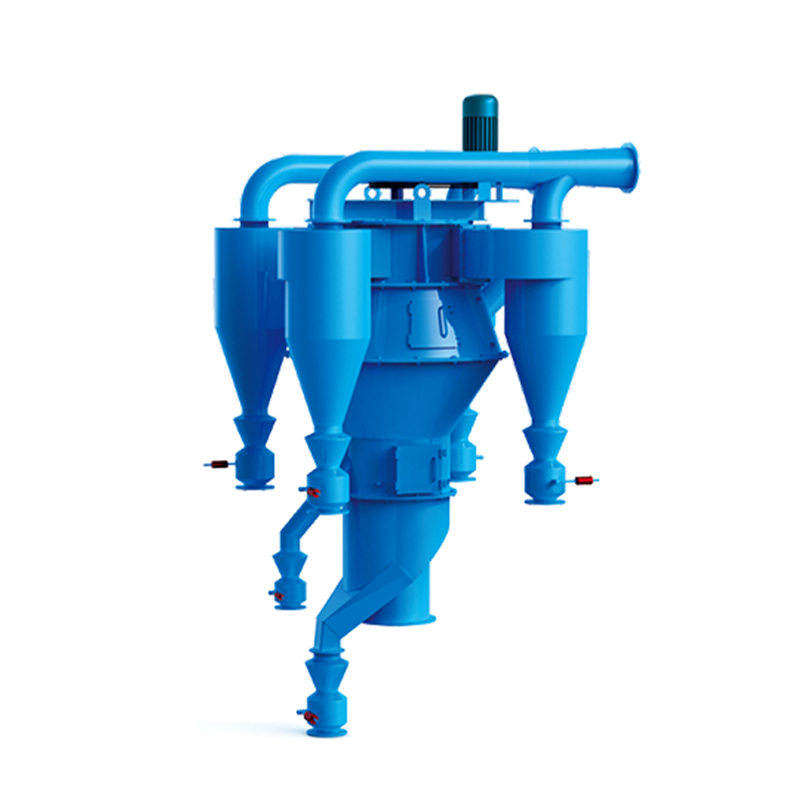 TS-CX Series Ultrafine Powder ClassifierDry ultrafine classification with adjustable 200–1000 mesh fineness, suited when powder quality depends on precise top-cut and fines removal in continuous processing.View Product →
How Powder Coating Powder Is Made
Turning resin, pigment, and filler into a sprayable powder is a sequence of mixing, melting, and size reduction — and the last two steps decide the finished product.
- Weigh and premix the raw materials in a high-intensity mixer.
- Melt-blend in a twin-screw extruder at roughly 90–120 °C so the resin wets every pigment particle.
- Cool the melt on a belt, then flake and crush it into chips.
- Grind and classify the chips, often in a single air-classifying mill, to hit the target particle size.
- Sieving, metal detection, and packaging.
The grinding stage is where most plants gain or lose money.
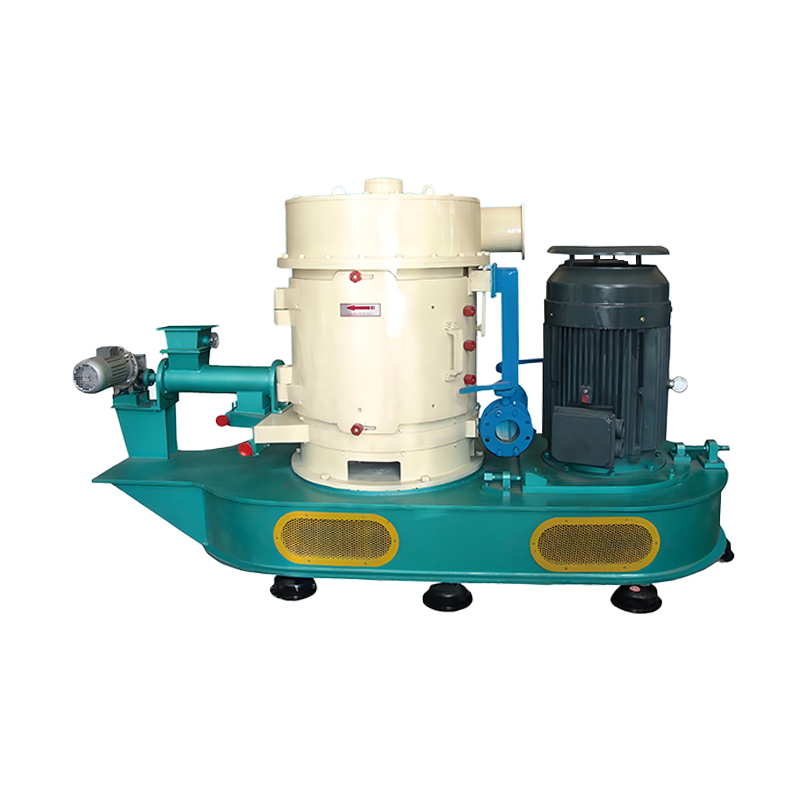
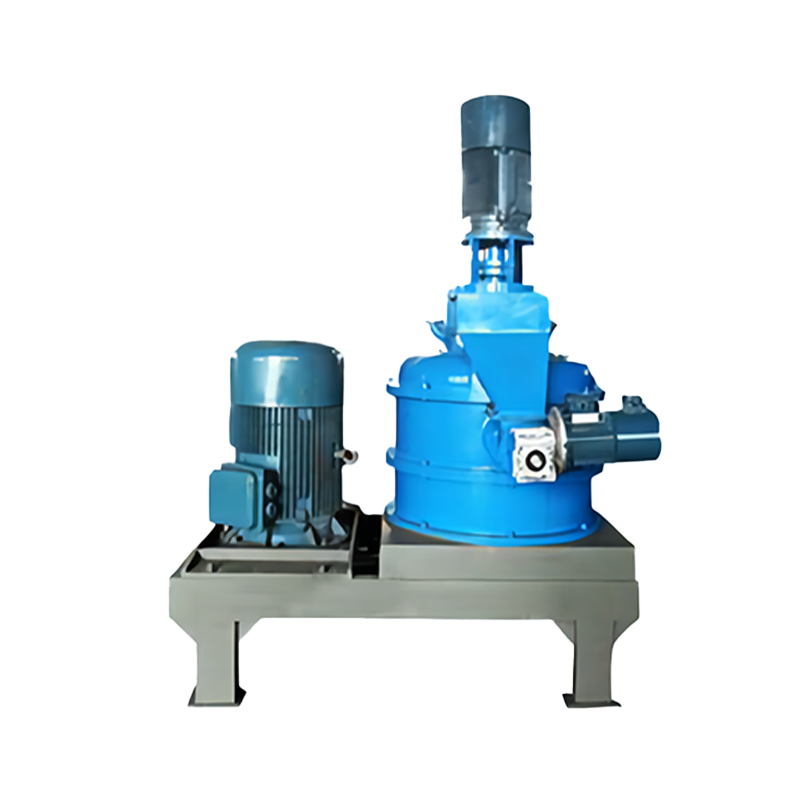 Air Classification Mill for Ultrafine GrindingCombines impact grinding and internal classification to control D50 from 1.5–45 μm, helping manage heat in powder coating resin milling.View Product →
An air-classifying mill combines impact grinding with an internal classifier wheel, so only particles below the cut point leave the mill while oversize material keeps circulating. Grinding heat is carried away by the air stream, which matters because powder coating resins soften and smear if the mill runs hot.
Coating Particles, Not Panels
The same word appears one stage earlier in the chain. Dry particle coating — often called powder modification — wraps each particle in a thin layer of additive, pigment, or functional material without dissolving anything.
In powder coating production this is used to bond metallic pigments so they no longer separate from the base powder during tribo charging, and to dry-coat host particles with nano-scale silica or alumina to improve flowability and charge stability. Beyond coatings, the same technique improves the dispersion of fillers in cement, chemical, and battery materials.
Rotor-based units do the work with high shear and short residence time, which keeps temperature under control. Our powder coating and modification machine is built for exactly this duty, combining drying, disintegration, and surface modification in a single pass.
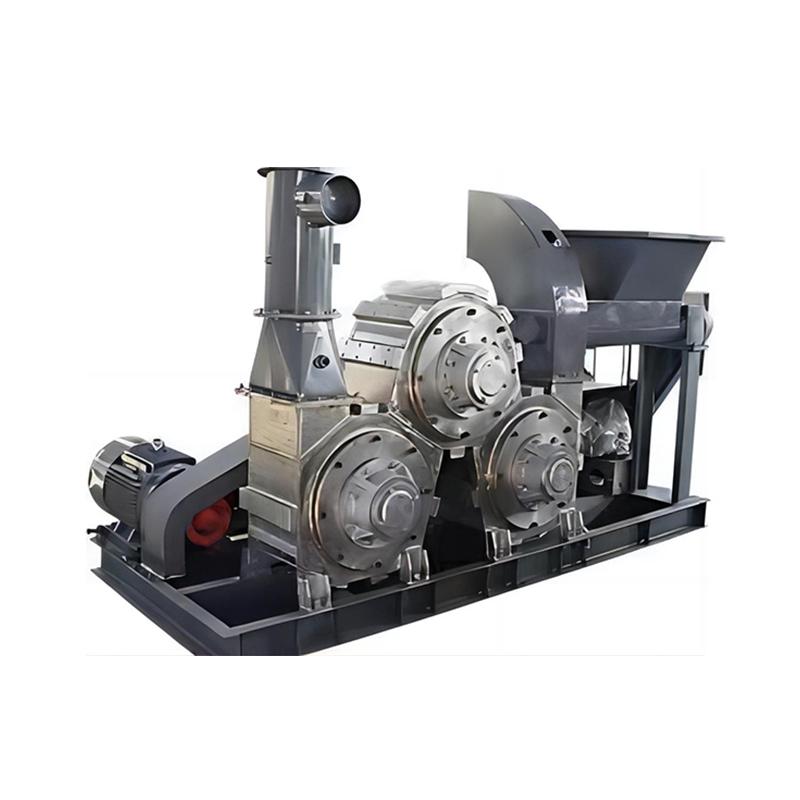 Powder Coating and Modification MachineCombines drying, disintegration, and surface modification in one pass for mineral powders, with precise modifier dosing and friction-generated heat.View Product →
Dust Control, Recovery, and Line Hygiene
Powder coating is a dust-generating business at both ends of the chain. In the booth, overspray must be captured and either reclaimed or disposed of; in the grinding and classification plant, fine fractions must be collected before they reach the filter or the workplace.
Two rules keep a line clean and compliant:
- Separate reclaim from waste. A cyclone returns usable coarse powder to the hopper, while a cartridge or bag filter handles the fine fraction that would otherwise spoil the reclaim.
- Size the collector for the dust, not the airflow. Powder coating fines are light and sticky, so pulse-clean bag collectors with generous cloth area hold a stable pressure drop far longer than undersized units.
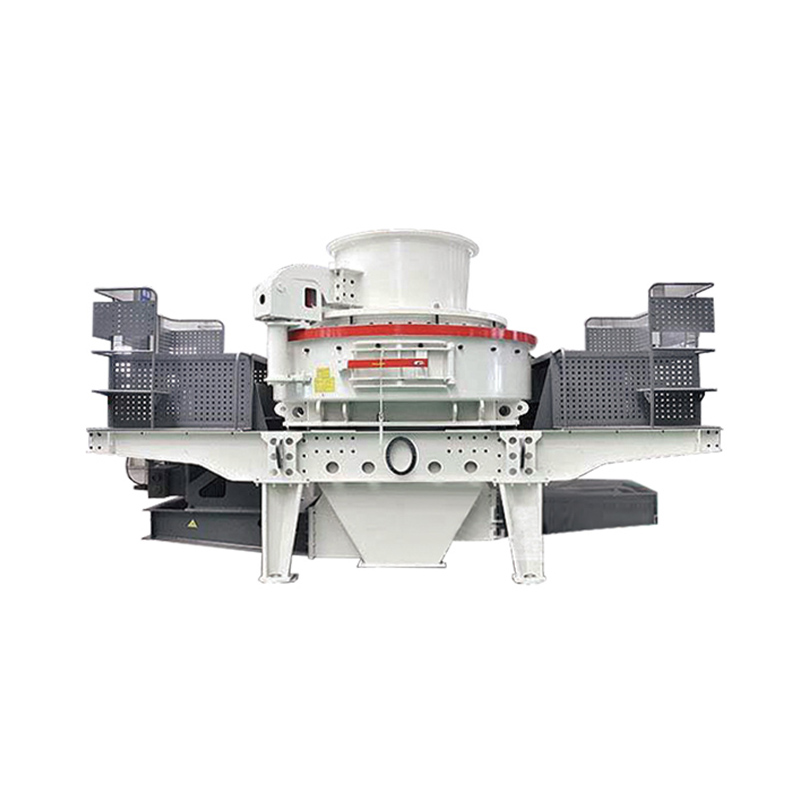
Since 2002 our team has built grinding, classification, drying, and dust removal equipment for the cement, chemical, power, and steel industries, backed by ISO 9001, ISO 14001, and OHSAS 18001 certification. Pulse bag collectors such as the LMC/CDMC series and coal-mill-specific air-box units are standard tools in that toolkit.
Key Takeaways
- A powder coating is a 100% solid, solvent-free finish applied electrostatically and cured in an oven into a hard film.
- Film thickness typically lands between 50 and 100 µm, and a well-run booth recovers 95% or more of its overspray.
- Performance is decided long before the spray gun — by particle size distribution, grinding, and classification.
- Dry particle coating and modification extends the same idea to the particle surface itself.
If you are specifying a grinding, classification, drying, or dust removal line for powder production, our engineers can review your material and target particle size distribution. Send us the details and we will come back with a workable configuration.

 Email:ycjnd@163.com
 Telephone:+86-13770001111
 Phone:+86-515-88582588



